
Published: April 7, 2026 | thefinalconvergence.com
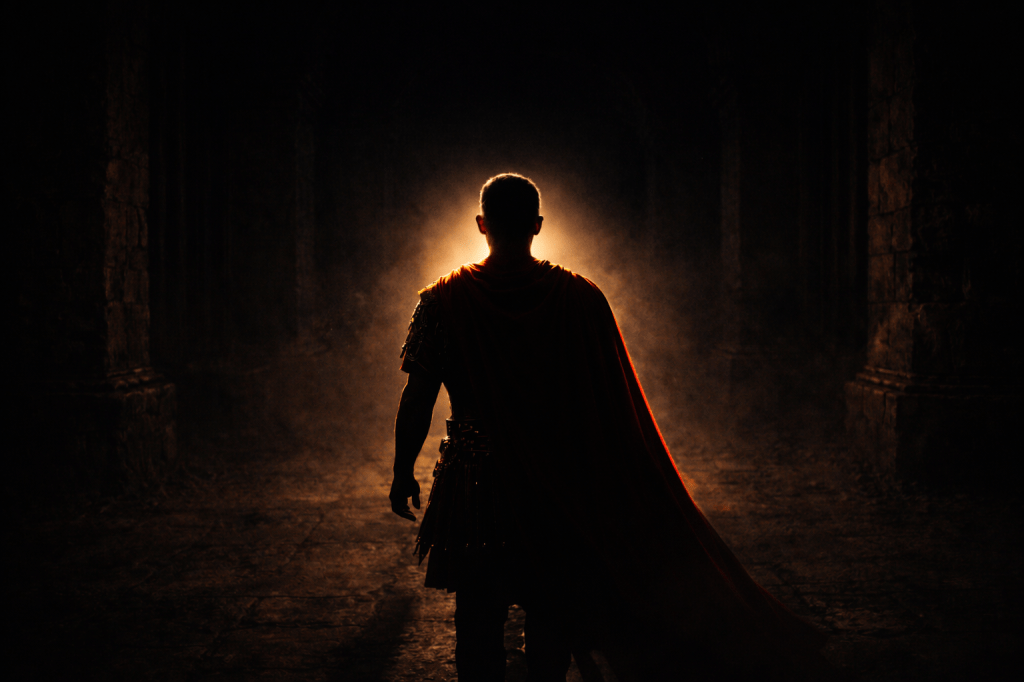
Two thousand years ago, a Roman governor stood face to face with the Son of God and asked one of the most profound questions in human history.
“What is truth?”
He did not wait for an answer. He turned and walked away.
And in doing so, Pontius Pilate became the patron saint of the post-truth age — a man who had Truth standing right in front of him, asked the right question, and walked away before the answer could change him.
That moment, recorded in John 18:38, is not merely a footnote in the passion narrative. It is a mirror. And when the modern world looks into it, it sees itself staring back.
The Question That Defined a Governor — and a Generation
The exchange between Pilate and Jesus in John 18 is remarkable for what it reveals about both men.
Jesus had just declared something that should have stopped Pilate cold: “To this end was I born, and for this cause came I into the world, that I should bear witness unto the truth. Every one that is of the truth heareth my voice” (John 18:37).
Every one that is of the truth heareth my voice.
That is not a gentle suggestion. It is a dividing line. Those who belong to truth hear Him. Those who do not — walk away.
Pilate walked away.
His question — “What is truth?” — was not a sincere inquiry. It was a dismissal dressed up as philosophy. He had already made his decision. Truth was inconvenient. Truth required a verdict that would cost him something. So he asked the question, turned his back, and went to tell the crowd that he found no fault in Jesus — while simultaneously handing Him over to be crucified.
Pilate did not deny that truth existed. He simply decided it did not apply to him.
Sound familiar?
We Live in Pilate’s World
The Oxford Dictionaries named post-truth the word of the year back in 2016, defining it as circumstances in which objective facts are less influential in shaping public opinion than appeals to emotion and personal belief.
But the concept is far older than the dictionary entry.
The post-truth age is simply Pilate’s question asked at industrial scale — by governments, by media, by academia, by entertainment, and increasingly, by the church. Truth has not disappeared. It has simply been repositioned. Instead of something discovered, it is now something constructed. Instead of something absolute, it is now something personal. Instead of something that makes demands on us, it is now something we make demands of.
The prophet Isaiah saw this coming long before Pilate’s sandals ever touched Jerusalem stone: “Woe unto them that call evil good, and good evil; that put darkness for light, and light for darkness; that put bitter for sweet, and sweet for bitter!” (Isaiah 5:20).
The inversion Isaiah described is not just moral — it is epistemological. When a culture loses its grip on truth, it does not simply make bad decisions. It loses the capacity to recognize the difference between a bad decision and a good one. And once that capacity is gone, everything is up for renegotiation — including the gospel.
What the World Says Truth Is
Walk through any university campus, scroll through any social media feed, or sit through most modern church services and you will encounter several competing definitions of truth — none of them biblical.
Truth is what feels right. The heart is the final authority. If it resonates with you emotionally, it must be true. Scripture has a direct word for this: “The heart is deceitful above all things, and desperately wicked: who can know it?” (Jeremiah 17:9). The heart is not a compass. It is a crime scene.
Truth is what the majority agrees on. Consensus becomes the standard — whether scientific, cultural, or religious. But the majority crucified Jesus. The majority built the tower of Babel. The majority followed Jeroboam into idolatry. Numbers have never been God’s measure of correctness.
Truth is what works for you. Pragmatism — if it produces results, it must be right. But “There is a way that seemeth right unto a man, but the end thereof are the ways of death” (Proverbs 14:12). The road to destruction is paved with things that seemed to work.
Truth is evolving. What was true yesterday may not be true tomorrow. This is the doctrine of the age — applied to gender, applied to morality, applied to Scripture itself. Progressive revelation without a closed canon. But “Jesus Christ the same yesterday, and to day, and for ever” (Hebrews 13:8). If truth is in Him, and He does not change, then truth does not change.
Every one of these definitions has one thing in common: they dethrone Scripture and enthrone something else in its place. And every one of them leads to the same destination — a man standing in front of Truth, asking what it is, and walking away.
What the Bible Says Truth Is
The Word of God does not leave the question unanswered.
Jesus did not say He had the truth, or that He pointed to the truth, or that He was one path among many toward truth. He said: “I am the way, the truth, and the life: no man cometh unto the Father, but by me” (John 14:6).
Truth is not a concept. Truth is a Person.
And that Person prayed this over His disciples the night before He was crucified: “Sanctify them through thy truth: thy word is truth” (John 17:17).
Truth is a Person — and that Person has given us a Book.
This is the entire foundation of Sola Scriptura — Scripture alone as the final, sufficient, and authoritative source of truth for the believer. Not tradition. Not councils. Not feelings. Not consensus. Not the declarations of popes or the visions of self-appointed prophets. The Word of God, and the Word of God alone.
“All scripture is given by inspiration of God, and is profitable for doctrine, for reproof, for correction, for instruction in righteousness: that the man of God may be perfect, throughly furnished unto all good works” (2 Timothy 3:16-17).
Throughly furnished. Complete. Sufficient.
The Bible does not point you toward truth and leave you to find the rest on your own. It is the truth — in its entirety, in its sufficiency, in its finality.
Why Pilate’s Question Still Has No Answer — For Those Who Walk Away
Here is the haunting reality of John 18:38.
Pilate asked “What is truth?” while Truth stood silent before him. Jesus did not chase Pilate down the hallway. He did not soften the message or reframe the answer so Pilate would find it more palatable. He simply stood there — the same answer He has always been, the same answer He will always be.
The answer to Pilate’s question has never changed. What has changed is whether people are willing to stand still long enough to receive it.
The post-truth world is full of people asking Pilate’s question. They ask it in philosophy classrooms and therapy sessions, in political speeches and church services. And most of them, like Pilate, are already walking away before the sentence is finished — not because the answer is unavailable, but because the answer is inconvenient.
Truth requires surrender. Truth requires that you submit your intellect, your emotions, your preferences, and your will to something outside yourself. And for a generation trained to find authority within themselves, that is the most radical demand imaginable.
But it is the only demand that leads to life.
“Buy the truth, and sell it not” (Proverbs 23:23).
That verse is not speaking of a financial transaction. It is speaking of a posture. Hold truth at any cost. Do not trade it away for comfort, for acceptance, for belonging, or for peace with a world that has decided truth is whatever it wants it to be.
This Is Why This Book Exists
What Is Truth? Unshakable Truth in a Post-Truth World was written for this exact moment — for believers who feel the ground shifting beneath them and need to know what does not move. For those who have been told that certainty is arrogance, that doctrine divides, and that the safest faith is a flexible one. For those who, like Pilate, have asked the question — but unlike Pilate, are willing to wait for the answer.
The answer has not changed in two thousand years.
It will not change in the next two thousand.
Truth is a Person. His name is Jesus. And His Word stands forever.
📖 What Is Truth? Unshakable Truth in a Post-Truth World is available now on Amazon in paperback and Kindle. Written by Menno Zweers | The Final Convergence Discernment Series Get your copy on Amazon →
Explore more at thefinalconvergence.com | Follow on Instagram, Facebook, X, and YouTube
 The Final Convergence
Leave a comment