
Published: April 29, 2026 | thefinalconvergence.com
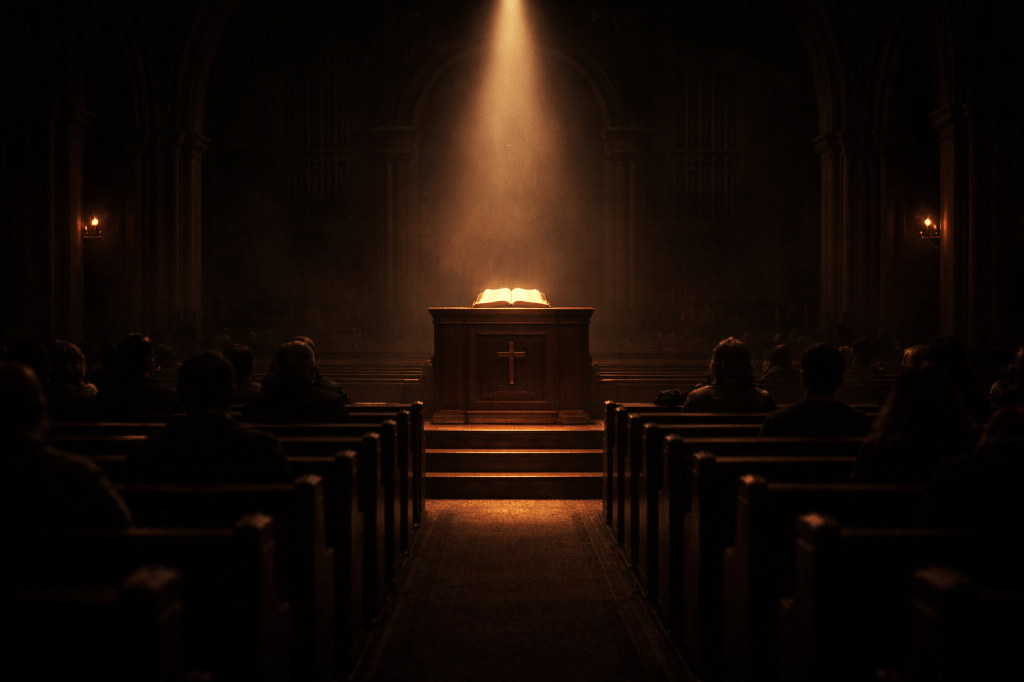
Over the past weeks we have covered a great deal of difficult ground.
We have named the ways the modern church has lost its grip on truth, through comfort, relevance, and celebrity. We have examined the false gospels filling pulpits. We have looked at the itching ears that seek teachers who tell them what they want to hear. We have applied the fruit test to false teachers and named the movements that have displaced Scripture from its rightful throne.
But there is a question that all of that examination naturally produces, and it is one of the most practically urgent questions a believer can ask:
What about my church?
Not the movements in the abstract. Not the celebrity pastors on the conference circuit. The specific congregation where you worship every week, where your children are being taught, where you take communion, where you are in relationship with the community of faith that shapes your spiritual life. Is that church grounded in the Word of God? Is it building on the foundation that will stand, or on something else?
This is not a comfortable question. It requires the kind of honest, clear-eyed, Scripture-grounded evaluation that most church cultures actively discourage, because questioning the church you attend is frequently framed as divisive, disloyal, or spiritually immature.
But the Bereans did not consider it divisive to test the apostle Paul against Scripture. They were commended for it, called more noble than those who did not. And if even Paul’s preaching was to be tested, no local church is exempt from examination.
Today I want to give you a practical framework for that examination, a Berean checklist drawn entirely from Scripture that you can apply to your own church with honesty, clarity, and the pastoral purpose of building up rather than tearing down.
Why This Matters More Than You Think
Before the checklist, a brief word about why this matters, because the stakes of getting it wrong are higher than most believers realize.
The church you attend does not merely provide you with a weekly spiritual experience. It forms you. Over months and years of sitting under its teaching, participating in its culture, absorbing its assumptions about what Christianity is and what it requires, the church shapes your theology, your spiritual habits, your understanding of God, your practice of prayer, your reading of Scripture, and your capacity for discernment.
A church grounded in the Word produces believers grounded in the Word, people whose faith is built on solid rock, who can withstand the storms of false teaching, cultural pressure, and personal suffering because their foundation is the sufficient, final, authoritative Word of God.
A church that has drifted from the Word produces believers who have drifted with it, people whose faith is built on the personality of the pastor, the warmth of the community, the quality of the worship experience, or the particular theological tradition of their denomination. When any of those things shift or disappoint or fail, and they will, the faith built on them shifts and disappoints and fails with them.
“Therefore whosoever heareth these sayings of mine, and doeth them, I will liken him unto a wise man, which built his house upon a rock: and the rain descended, and the floods came, and the winds blew, and beat upon that house; and it fell not: for it was founded upon a rock” (Matthew 7:24-25).
The rock is the Word of Christ, heard and done. The church that builds on that rock produces believers who stand. The church that builds on anything else produces believers who fall when the storm comes.
The question of whether your church is grounded in the Word is not an academic question. It is a question about the foundation your faith is being built on, and whether it will hold.
The Berean Checklist: Ten Questions to Ask of Your Church
These ten questions are drawn directly from Scripture, not from any particular denominational tradition, theological school, or personal preference. Apply them honestly, prayerfully, and with a genuine desire to know the truth rather than to confirm what you already believe.
1. Does the preaching come from the text?
“Preach the word; be instant in season, out of season; reprove, rebuke, exhort with all longsuffering and doctrine” (2 Timothy 4:2).
The most fundamental question about any church’s relationship to the Word is whether the Word is actually preached. Not illustrated. Not referenced. Preached, meaning the message is determined by what the text says rather than the text being selected to support a message the preacher had already decided to give.
Expository preaching, working through books of the Bible passage by passage, letting the text set the agenda, is the method most consistent with the biblical mandate to preach the Word. It ensures that the whole counsel of God is addressed over time, that uncomfortable passages cannot be indefinitely avoided, and that the congregation’s spiritual diet is determined by Scripture rather than by the preferences of the preacher or the felt needs of the congregation.
Ask: when the sermon is over, do you know what the passage said? Did the preacher’s conclusions come from the text, or did the text come from the preacher’s conclusions?
2. Is Scripture the final authority — or one authority among several?
“To the law and to the testimony: if they speak not according to this word, it is because there is no light in them” (Isaiah 8:20).
In a church where Scripture is truly the final authority, the answer to every doctrinal question begins and ends with the Word. When a teaching is questioned, the response is “here is what Scripture says”, not “here is what our tradition says” or “here is what our pastor believes” or “here is the prophetic word we received.”
Watch for the moment when something other than Scripture is invoked as the final word. Tradition, denominational policy, pastoral authority, prophetic revelation, therapeutic consensus, any of these functioning as a court of appeal above Scripture is a sign that Scripture is not actually the final authority.
3. Is the gospel of justification by grace through faith alone clearly and regularly preached?
“For by grace are ye saved through faith; and that not of yourselves: it is the gift of God: not of works, lest any man should boast” (Ephesians 2:8-9).
The gospel is not a background assumption, it is the message that should permeate every aspect of the church’s life and ministry. A church that preaches the gospel clearly is a church where the finished work of Christ is the foundation of everything, where sin is named, where grace is proclaimed, where repentance and faith are called for, and where the righteousness of God in Christ is the ground of the believer’s standing before God.
Ask: is the gospel you hear at this church the gospel Paul preached in 1 Corinthians 15, Christ died for our sins, was buried, and rose again? Or is it a therapeutic, moralistic, or prosperity version that uses Christian language without the cross at the center?
4. Is sin named and repentance called for?
“Repent ye therefore, and be converted, that your sins may be blotted out” (Acts 3:19).
A church that preaches the true gospel will preach repentance, because you cannot preach the forgiveness of sins without first establishing that sin exists, that it is serious, and that it requires genuine turning from rather than mere adjustment of behavior.
The church that never produces discomfort, where no one is ever convicted of specific sin by the preaching, where the atmosphere is consistently affirming and warm without the sharpness of the Word doing its diagnostic work, has almost certainly replaced the gospel with something more palatable.
“For the word of God is quick, and powerful, and sharper than any twoedged sword” (Hebrews 4:12). If the Word being preached never cuts, ask whether it is really the Word being preached.
5. Is the full counsel of God taught — including the difficult passages?
“For I have not shunned to declare unto you all the counsel of God” (Acts 20:27).
Paul’s commitment to the full counsel of God, every passage, every doctrine, every demand of Scripture — is the model for faithful preaching. A church that only preaches the comfortable passages, that systematically avoids the texts about judgment, about holiness, about biblical sexuality, about the exclusivity of Christ, about the cost of discipleship, has not committed to the full counsel of God.
Over the course of a year of preaching, ask: which passages have been consistently avoided? Which doctrines have never been addressed? The gaps in a church’s preaching are often as diagnostic as its content.
6. Is there biblical accountability and church discipline?
“Moreover if thy brother shall trespass against thee, go and tell him his fault between thee and him alone” (Matthew 18:15).
“Them that sin rebuke before all, that others also may fear” (1 Timothy 5:20).
A church that takes Scripture seriously will take sin seriously, including among its own members and leadership. Biblical church discipline, the process of confronting sin, calling for repentance, and if necessary removing the unrepentant from fellowship, is not a medieval relic. It is a New Testament command that protects the integrity of the congregation and expresses genuine love for the soul of the sinner.
A church where no one is ever held accountable, where discipline is never practiced, and where the fear of offense consistently overrides the call to holiness has effectively decided that its own peace is more important than the authority of the Word.
7. Is the leadership above reproach according to biblical standards?
“A bishop then must be blameless, the husband of one wife, vigilant, sober, of good behaviour, given to hospitality, apt to teach” (1 Timothy 3:2).
The biblical qualifications for church leadership are specific, demanding, and character-focused. They are not primarily about gifting, charisma, vision, or communication skill, they are about the quality of the leader’s personal life, marriage, family, and reputation.
A church where leaders consistently fail to meet the biblical qualifications, where financial impropriety, moral failure, marital breakdown, or the misuse of authority is either ignored or minimized, has subordinated the standard of Scripture to the desire to maintain a leader whose platform or gifting seems too valuable to lose.
8. Are the sheep protected from false teaching?
“Take heed therefore unto yourselves, and to all the flock, over the which the Holy Ghost hath made you overseers, to feed the church of God” (Acts 20:28).
“Also of your own selves shall men arise, speaking perverse things, to draw away disciples after them. Therefore watch” (Acts 20:30-31).
A church that is grounded in the Word will equip its people to recognize and resist false teaching, not simply protect them from exposure to it, but train them in the discernment that enables them to identify and reject it themselves. The pastor who never warns against specific false teaching, who never names the movements and doctrines that are drawing believers away, has not fulfilled the watchman’s responsibility.
Ask: does your church equip you to discern? Or does it simply expect you to trust the leadership’s judgment without developing your own?
9. Does the church embrace or resist the spirit of the age?
“And be not conformed to this world: but be ye transformed by the renewing of your mind” (Romans 12:2).
The pressure on the church to accommodate the surrounding culture, on questions of sexuality, on the nature of truth, on the exclusivity of Christ, on the reality of hell, on the authority of Scripture, is relentless. A church grounded in the Word will feel that pressure and resist it, knowing that faithfulness to Scripture will sometimes produce tension with the culture and even with the preferences of its own congregation.
A church that consistently adjusts its theology to reduce that tension, that softens its position on biblical sexuality, that qualifies the exclusivity of Christ, that replaces the language of sin with the language of dysfunction, has made accommodation rather than faithfulness its governing principle.
10. Does the church produce disciples or consumers?
“Go ye therefore, and teach all nations, baptizing them in the name of the Father, and of the Son, and of the Holy Ghost: teaching them to observe all things whatsoever I have commanded you” (Matthew 28:19-20).
The Great Commission is a commission to make disciples, people who are being taught to observe all things that Christ commanded, who are growing in obedience to the Word, who are being equipped to make disciples of others. Not consumers of religious services who attend weekly, feel spiritually nourished, and return the following week without any meaningful transformation in how they live.
Ask: are the people in this church growing in their knowledge of Scripture and their obedience to it? Are they being equipped to serve, to give, to evangelize, to suffer faithfully? Or is the church primarily producing an audience for a weekly production?
What to Do With What You Find
This checklist is not designed to produce church-hoppers, people who leave every congregation the moment it fails to meet every standard perfectly. No church is perfect. Every congregation consists of fallen people in various stages of growth and sanctification, led by fallen pastors who preach imperfect sermons and make imperfect decisions.
The question is not whether your church is perfect. The question is whether it is genuinely grounded in the Word, whether Scripture functions as the real final authority, whether the gospel is genuinely at the center, whether there is a genuine commitment to faithfulness that produces growth over time even when it is slow and imperfect.
If your church is genuinely grounded in the Word, imperfectly but genuinely, then the most faithful thing you can do is stay, serve, pray, and contribute to its growth. A church that is genuinely committed to the Word needs members who share that commitment.
If your honest evaluation reveals that the Word is not the real authority, that the gospel has been replaced, that Scripture is consistently subordinated to something else, that the drift is real and the leadership is not moving toward correction, then the most loving thing you can do, for yourself and for your family, is seek a church where the Word is genuinely at the center.
“These were more noble than those in Thessalonica, in that they received the word with all readiness of mind, and searched the scriptures daily, whether those things were so” (Acts 17:11).
The Berean posture applies to your church. Search the scriptures. Whether those things are so.
The Word is the standard. Apply it honestly. And let it lead you where it leads.
📖 This post is adapted from What Is Truth? Unshakable Truth in a Post-Truth World. If it helped you, the full book is available on Amazon — or you can support this ministry directly.
This article is part of the What Is Truth? series. View all articles here → What Is Truth? — Articles, Teachings, and Biblical Analysis
Explore more at thefinalconvergence.com | Follow on Instagram, Facebook, X, and YouTube
If you like to be updated on new blogs, sign up to our newsletter!


Leave a comment