
Published: May 31, 2026 | thefinalconvergence.com
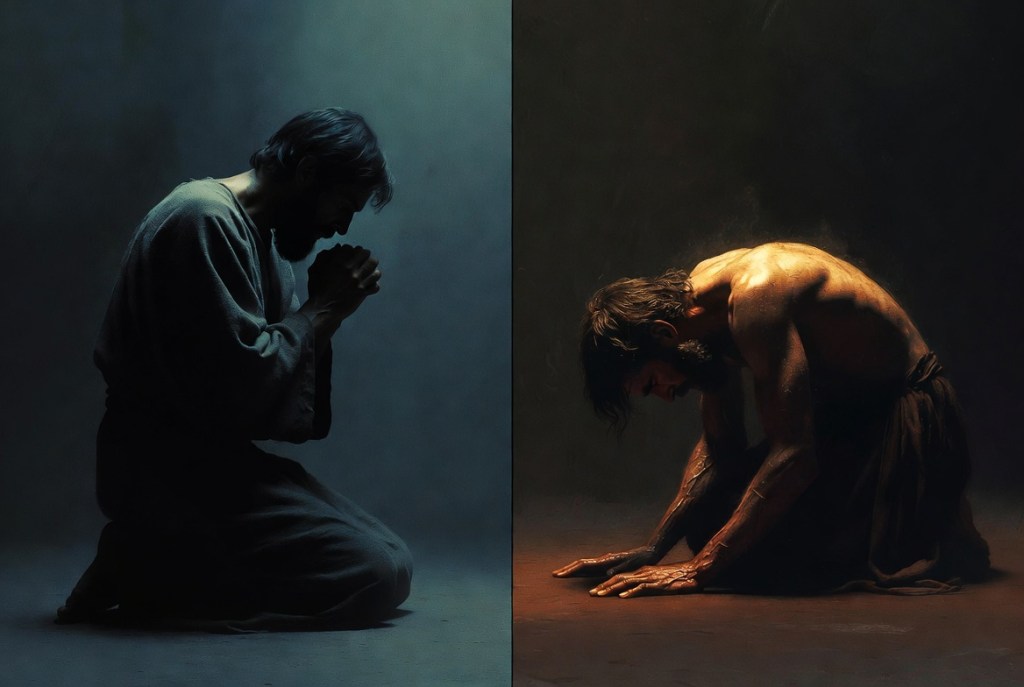
Four posts into the examination of what the gospel is not, and today we arrive at perhaps the most sensitive one. Not because the subject is theologically complex. The theology here is not particularly difficult. But because the sinner’s prayer is so woven into the fabric of evangelical Christianity, so embedded in the way millions of people understand their own conversion, so connected to the most significant spiritual moments of their lives, that questioning it feels like questioning the conversion itself. That is precisely why it needs to be examined carefully, honestly, and from the Word.
Because the danger is not that the sinner’s prayer is evil. It is not. The danger is that it has been treated as the mechanism of salvation rather than the expression of it, and that the treatment has given millions of people a confidence about their standing before God that rests on a formula they repeated, rather than on a genuine repentance and genuine faith that the formula was supposed to express.
Let me be clear from the beginning: a prayer expressing genuine repentance and genuine faith in Jesus Christ is a genuine and valuable thing. The issue is not the prayer. The issue is what the prayer has become in the culture of contemporary evangelical Christianity, and the false assurance that culture has produced on an enormous scale.
What Is Not in the Bible
The sinner’s prayer, as it is practiced in contemporary evangelism, as it is printed on the backs of gospel tracts, as it is led from the front of crusade meetings and church services and revival gatherings, is not in the Bible. There is no formula in Scripture. There is no prescribed set of words that, when spoken, constitutes the saving transaction. There is no moment in the New Testament where the apostles led a crowd in a corporate recitation of a scripted prayer as the mechanism by which individuals were saved.
What is in the Bible, consistently, repeatedly, across every evangelistic encounter recorded in the book of Acts, is a call to repentance and faith. Not a call to repeat a prayer. A call to do something inward, to genuinely change the direction of the will, to genuinely transfer the trust of the soul to Jesus Christ, that is then expressed in whatever outward form is appropriate to the moment.
Paul and Silas, in the Philippian jail, told the terrified jailer: “Believe on the Lord Jesus Christ, and thou shalt be saved” (Acts 16:31). Not, repeat after me. Believe. The inward act. The genuine fiducia we examined on Day 7. Peter at Pentecost called the crowd to “repent…and be baptized” (Acts 2:38), not to repeat a scripted prayer. The call was to genuine metanoia, the actual change of mind and direction we examined on Day 6, followed by the public act of baptism declaring that the repentance had taken place.
The distinction matters enormously. Because repeating a prayer and genuinely repenting and believing are two entirely different things, and the formula can be performed without the reality just as easily as the reality can exist without the formula.
The Verse Most Often Misapplied
The primary scriptural basis offered for the sinner’s prayer practice is Romans 10:9-10: “That if thou shalt confess with thy mouth the Lord Jesus, and shalt believe in thine heart that God hath raised him from the dead, thou shalt be saved. For with the heart man believeth unto righteousness; and with the mouth confession is made unto salvation.” Read carefully, this verse is not describing a prayer formula. It is describing the relationship between genuine inward faith and its outward expression. And the emphasis is overwhelmingly on the inward reality, the heart belief, not the outward expression.
With the heart man believeth unto righteousness. The believing, the pistis, the fiducia, the genuine entrusting of the soul to Christ, happens in the heart. That is where righteousness is reckoned. That is where the saving transaction occurs. The mouth gives expression to what the heart has already done. The confession is not the cause of the saving. It is the declaration of the saving. The mouth speaks what the heart has genuinely believed. The outward follows the inward, necessarily, genuinely, but as expression rather than as mechanism.
The sinner’s prayer, as commonly practiced, has inverted this relationship. The mouth is led through the formula first, in the hope that the heart will follow, or in the assumption that the repetition of the correct words constitutes the genuine belief those words were meant to express. And the result, on a mass scale, is people who have confessed with their mouth without having believed in their heart, who have performed the outward expression of a reality that was never there, and who have been told by the culture that received their recitation that the formula is what saves them.
The False Assurance Crisis
The pastoral consequence of the sinner’s prayer culture is perhaps the most significant driver of the false assurance crisis that Matthew 7:21-23 describes. Walk through what happens. A person attends a service or crusade. They hear a gospel presentation, of varying quality, varying content, varying theological accuracy. They are emotionally moved. They respond to an altar call or a raised hand or a counselor’s invitation. They are led through a scripted prayer. They are told: if you meant that prayer, you are now saved. Welcome to the family. They leave with a certificate. A date in their Bible. A memory of the moment. And an assurance of salvation grounded entirely in the fact that they repeated the right words on a specific occasion.
Now two possibilities.
Possibility one: genuine saving faith was present. The words expressed a genuine repentance and a genuine trust in Christ that had genuinely taken place in the heart. The prayer was the expression of a real reality. This person is genuinely saved, and the formula was the vehicle for expressing something real.
Possibility two: genuine saving faith was not present. The emotional response was real, the music was moving, the moment was powerful, the desire to belong was genuine, but the specific cognitive and volitional acts of metanoia and fiducia never occurred. The person repeated the words in the emotional atmosphere of the moment without any genuine change of mind, genuine godly sorrow over sin, or genuine transferring of the soul’s trust to Christ alone. This person is not saved, and has been given powerful and specific grounds for believing they are.
The sinner’s prayer culture consistently produces both possibilities, and provides no reliable mechanism for distinguishing between them. Because the assurance is grounded in the formula rather than in the inward reality the formula was meant to express. And the person in possibility two, who has a date, a memory, a certificate, and the confident testimony of the church community that they are saved, has the most powerful possible reason to believe they are genuinely converted and the most powerful possible reason to never re-examine that assumption.
The Prodigal Son Did Not Repeat a Formula
One of the most complete pictures of genuine conversion in all of Scripture is the parable of the Prodigal Son in Luke 15. And it is instructive precisely for what it does and does not contain. The prodigal comes to his senses in the far country. The inward reality precedes the outward expression, “he came to himself” (Luke 15:17). The intellectual component: he understands what he has done and what his father’s house offers. The emotional component: he is genuinely desperate, genuinely broken, genuinely aware of his condition. The volitional component: “I will arise and go to my father” (Luke 15:18), the decision, the turning of the will.
He rehearses a confession. He knows what he is going to say when he arrives. And when he arrives, still a great way off, his father runs to him. The reunion happens before the confession is complete. The father sees him coming and moves toward him before a single word has been spoken. “But when he was yet a great way off, his father saw him, and had compassion, and ran, and fell on his neck, and kissed him” (Luke 15:20).
The father responds to the returning, not to the recitation. He responds to the genuine turning, the coming to himself, the arising, the going to my father, before the words are said. Because the words, when they come, are the expression of what is already genuinely true of the son’s heart. No formula required. The genuine repentance was sufficient. The father’s response was to the reality.
The Right Place for Prayer in Conversion
None of this is an argument that converting sinners should not pray. Of course they should. Prayer, the direct, personal, genuine address to the God who has been offended and whose grace is being sought, is the natural and appropriate expression of genuine repentance and genuine faith. The thief on the cross prayed. “Lord, remember me when thou comest into thy kingdom” (Luke 23:42). Not a formula. A genuine, desperate, personal plea from a man who had nothing to offer and was trusting entirely in the mercy of the one he was addressing.
The publican in the temple prayed. “God be merciful to me a sinner” (Luke 18:13). Seven words. Not a formula. A genuine expression of genuine understanding, genuine sorrow, and genuine dependence on divine mercy.
The prayer that accompanies genuine conversion is the natural overflow of what is happening in the heart. It is not the mechanism by which the conversion is accomplished. It is the expression of the conversion that is already taking place, and it will take whatever form is genuine to the moment, whether scripted or spontaneous, whether long or as short as the publican’s seven words. What matters is not the form. What matters is the reality beneath the form.
Genuine repentance. Genuine faith. Genuine entrusting of the soul to Christ alone, on the basis of His finished work alone, by grace alone. A prayer that expresses all of that is a precious thing. A formula recited in the hope of receiving something that only the genuine version produces, is not. Make sure you know which one you prayed. And if the answer is uncertain, the invitation is still open. The finished work is still sufficient. The prodigal’s father is still watching the road. Come to Him, genuinely, with the real thing.
“With the heart man believeth unto righteousness; and with the mouth confession is made unto salvation.” — Romans 10:10 KJV
📖 This post is adapted from The Simplicity of the Gospel: What It Is, What It Is Not, and Why Everything Else Falls Short. If it helped you, the full book is available on Amazon — or you can support this ministry directly.
thefinalconvergence.com | Follow on Instagram, Facebook, X, and YouTube
If you like to be updated on new blogs, sign up to our newsletter!


Leave a comment