
Published: June 14, 2026 | thefinalconvergence.com
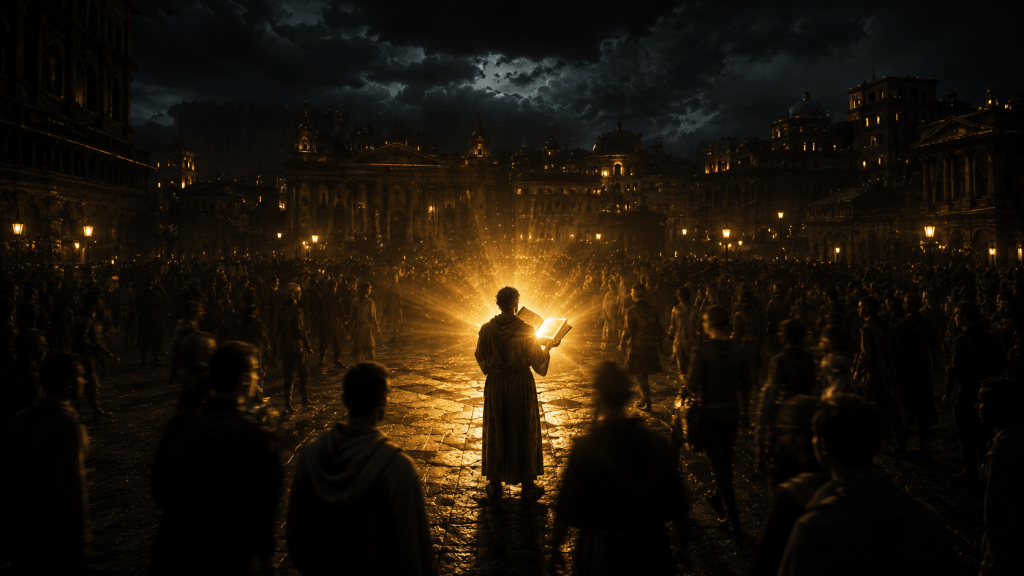
In the first century, the city of Corinth was the most rhetorically sophisticated urban center in the Greek world. Rhetoric, the art of persuasion, the craft of elegant and compelling speech, the discipline of constructing arguments that moved educated audiences toward desired conclusions, was not merely an academic interest in Corinth. It was a cultural value, a social currency, a marker of status and education that shaped how the city received and evaluated everything it heard. The professional orators of the ancient world competed for Corinth’s attention the way contemporary entertainers compete for streaming numbers. The city was accustomed to excellence of presentation.
Into this environment, the apostle Paul arrived. And made a decision that every contemporary church growth strategist, every seeker-sensitive pastor, every ministry consultant advising on how to reach a sophisticated urban audience would have immediately recognized as strategic suicide.
“And I, brethren, when I came to you, came not with excellency of speech or of wisdom, declaring unto you the testimony of God. For I determined not to know any thing among you, save Jesus Christ, and him crucified. And I was with you in weakness, and in fear, and in much trembling. And my speech and my preaching was not with enticing words of man’s wisdom, but in demonstration of the Spirit and of power” (1 Corinthians 2:1-4). Not with excellency of speech. Not with wisdom. Not with enticing words of man’s wisdom. I determined not to know anything among you save Jesus Christ and Him crucified. This was not strategic naivety. It was theological conviction. And it produced something that the Corinthian orators, with all their rhetorical skill, had never produced in that city.
A church.
Why Paul Made This Choice
The temptation Paul resisted, the temptation to supplement the simple message with rhetorical excellence, philosophical sophistication, or cultural accessibility, is the same temptation that the modern church has largely failed to resist.
The seeker-sensitive movement decided that the simple gospel needed a better delivery mechanism, that the unaided, unadorned proclamation of Christ crucified would not hold the attention of the educated, skeptical, entertained-to-death contemporary audience. The therapeutic movement decided that the simple gospel needed emotional packaging, that people needed to feel affirmed and welcomed before they could receive the challenging content of the cross. The experience-driven movement decided that the simple gospel needed supernatural confirmation, that contemporary audiences needed to see signs and wonders before they would take the message seriously.
Paul rejected all of these supplementary strategies. Not because he was naive about the rhetorical sophistication of his audience, his letters demonstrate an intellect and a literary skill that ranks among the finest in the ancient world. He refused the supplements deliberately. As a theological conviction.
“That your faith should not stand in the wisdom of men, but in the power of God” (1 Corinthians 2:5). That your faith should not stand in the wisdom of men. Paul understood something the contemporary church has largely forgotten: the thing that produces the faith must also be the thing that sustains the faith. If a person comes to faith through the excellence of the presentation, through the rhetorical skill, the emotional experience, the impressive delivery, then the faith will only last as long as the presentation remains excellent. When the eloquent preacher falls, the faith built on the eloquence falls. When the experience fades, the faith built on the experience fades. When the signs stop producing wonder, the faith built on the signs collapses.
But the faith that came through the simple proclamation of Christ crucified, unaided, unadorned, delivered in weakness and in fear and in much trembling, that faith stands. Because it was produced not by human wisdom but by the power of God. And the power of God does not fade when the circumstances change.
The Message That Seems Like Foolishness
Paul’s description of how the simple gospel of Christ crucified lands on its audience is disarmingly honest. “For the preaching of the cross is to them that perish foolishness; but unto us which are saved it is the power of God” (1 Corinthians 1:18). Foolishness. To the Greek mind, shaped by the categories of philosophical sophistication, the pursuit of wisdom, the appreciation of elegant intellectual construction, the idea that the eternal destiny of the human soul was settled by one man dying on a Roman execution device was not merely implausible. It was absurd. It was the kind of claim that educated people dismissed without serious engagement.
To the Jewish mind, shaped by the expectation of a conquering Messiah who would restore the Davidic kingdom and deliver Israel from her enemies, a crucified Messiah was not merely disappointing. It was a contradiction in terms. “Cursed is every one that hangeth on a tree” (Galatians 3:13, quoting Deuteronomy 21:23). The cross was the sign of divine curse, not divine redemption.
“But we preach Christ crucified, unto the Jews a stumblingblock, and unto the Greeks foolishness; but unto them which are called, both Jews and Greeks, Christ the power of God, and the wisdom of God. Because the foolishness of God is wiser than men; and the weakness of God is stronger than men” (1 Corinthians 1:23-25). The foolishness of God is wiser than men. The weakness of God is stronger than men.
The message that fails every human test of sophistication and cultural credibility is the message that carries within it the power of God. Not because foolishness is inherently powerful. Because this particular foolishness is divine. The cross that looks like weakness is the power of God. The gospel that sounds like absurdity to the philosophically sophisticated mind is the wisdom of God in a form that human wisdom cannot produce and cannot improve upon.
Which is why the church that supplements the simple message, to make it more culturally credible, more emotionally accessible, more rhetorically compelling, has not strengthened it. It has diluted it. Because the power was never in the presentation. It was always in the message. And any addition to the message that tries to make the cross more acceptable to the people the cross offends has accomplished nothing except the reduction of the one thing that saves.
What Paul Preached
“For I determined not to know any thing among you, save Jesus Christ, and him crucified” (1 Corinthians 2:2). The content of Paul’s Corinthian ministry, the specific thing he determined to know and proclaim, is Jesus Christ and Him crucified. Not Jesus Christ and His social justice program. Not Jesus Christ and His life-improvement teaching. Not Jesus Christ and the signs and wonders that demonstrated His divine power. Jesus Christ and Him crucified.
The cross is the center. The cross is the content. The cross is the specific place where the specific problem of specific human sin before the specific holy God was specifically addressed by the specific act of the specific Son of God. It is not one element among many in a comprehensive spiritual program. It is the thing. The one thing that Paul determined to know. The one thing that carries within it the power of God unto salvation.
Twenty-five days of this series have been working toward this declaration. We established what sin is, the specific offense of every human being against the holy God. We established who the holy God is, the one in whom there is no darkness at all, whose holiness creates the standard that every human being has failed. We established what the cross is, not a symbol but a specific judicial transaction in which the Son of God bore the specific penalty that specific justice demanded. We examined the resurrection, the Father’s specific declaration that the specific sacrifice was specifically accepted. We built the complete positive case for the specific gospel that Paul called of first importance.
And now, at the center of the final phase of the series, we arrive at the proclamation itself. Preach Christ and Him crucified. Not preach Christ and Him crucified plus the techniques to make it land better. Not preach Christ and Him crucified in the right emotional packaging. Not preach Christ and Him crucified with the supernatural verification that will make skeptical audiences take it seriously.
Preach Christ and Him crucified. Period. Complete. Sufficient.
The Demonstration of the Spirit
What Paul did not add in terms of human supplements was replaced by something that no human supplement could produce. “And my speech and my preaching was not with enticing words of man’s wisdom, but in demonstration of the Spirit and of power” (1 Corinthians 2:4). Demonstration of the Spirit and of power. Not the demonstration of rhetorical skill. Not the demonstration of cultural accessibility. The demonstration of the Spirit, the specific, divine, sovereign confirmation of the proclaimed Word by the One who inspired it, working in the hearts of those who heard it.
The Spirit who inspired the Word moves through the proclaimed Word, converting, regenerating, producing the faith that saves, bearing witness to the truth of the message in the hearts of those who receive it. This is the power that the simple gospel carries that no rhetorical supplement can replicate. Because the Spirit is not committed to moving through excellent presentations. He is committed to moving through the proclaimed Word. And the proclaimed Word, in whatever form it takes, carries within it the seed of the regenerate life that only the Spirit can produce.
“So then faith cometh by hearing, and hearing by the word of God” (Romans 10:17). Hearing by the word of God. Not hearing by the excellent presentation of the word of God. Not hearing by the emotionally compelling experience of the word of God. The word of God, proclaimed, heard, received by faith, produces the faith that saves, through the work of the Spirit who accompanies the Word He inspired.
The power is in the message. It has always been in the message. And the church that keeps returning the message to its center, Christ and Him crucified, unadorned, unaided, proclaimed in whatever weakness and fear and trembling is honest to the moment, is the church in which the Spirit of God does what He has always done through that message.
He saves.
The Most Urgent Task
With five days left in this series, and with a new season on this platform beginning to take shape on the horizon, it is worth pausing on the most urgent implication of today’s post.
The most urgent task of the Christian is not to find a better method of delivering the gospel. It is to actually deliver the gospel. To the specific person in your specific life who has not heard it. With whatever words, whatever confidence, whatever stumbling inadequacy is honest to your present capacity. Trusting that the power is in the message and not in the quality of your delivery.
“How then shall they call on him in whom they have not believed? and how shall they believe in him of whom they have not heard? and how shall they hear without a preacher?” (Romans 10:14). Without a preacher. Every believer who knows the gospel is a preacher in this sense, not necessarily in a pulpit, not necessarily with professional training, not necessarily with rhetorical excellence. But the person who knows Christ and Him crucified and who opens their mouth and speaks that message to a specific person is doing precisely what Paul did at Corinth. And the Spirit who accompanied the proclamation at Corinth accompanies the proclamation today.
The power is not in your eloquence. It never was. It is in the message. Which means your inadequacy is not the disqualifying factor you may fear it is. Preach Christ and Him crucified. In whatever form that takes for you. And trust the power that was always in the message.
“For I determined not to know any thing among you, save Jesus Christ, and him crucified.” — 1 Corinthians 2:2 KJV
📖 This post is adapted from The Simplicity of the Gospel: What It Is, What It Is Not, and Why Everything Else Falls Short. If it helped you, the full book is available on Amazon — or you can support this ministry directly.
thefinalconvergence.com | Follow on Instagram, Facebook, X, and YouTube
If you like to be updated on new blogs, sign up to our newsletter!


Leave a comment