
Published: August 18, 2026 | thefinalconvergence.com
Yesterday the Biblicism series closed. Thirty days establishing that the sixty-six canonical books of Scripture are the supreme, final, infallible, sufficient, and self-interpreting authority in all matters of Christian faith and practice. The Word alone. Above every system. Accountable to no tradition. Governed by no confession.
And the moment that argument is made, a question arrives that will not go away, the question every honest reader must eventually face, the question this new series exists to answer:
Which sixty-six? And how do we know?
The Biblicism argument rests its entire weight on the divine authority of the sixty-six books. But what if someone challenges the sixty-six? What if the Roman Catholic apologist points to the Apocrypha and asks why you trust the Protestant canon? What if the secular historian says the canon was assembled by fourth-century political power? What if the NAR prophet says the Spirit is still delivering authoritative revelation that supplements what is written?
These are not hypothetical challenges. They are the specific challenges the church faces right now, from multiple directions at once. And answering them is the work of the next thirty days, and of the book they are drawn from: Canon and Covenant: How God Preserved His Word Through History.
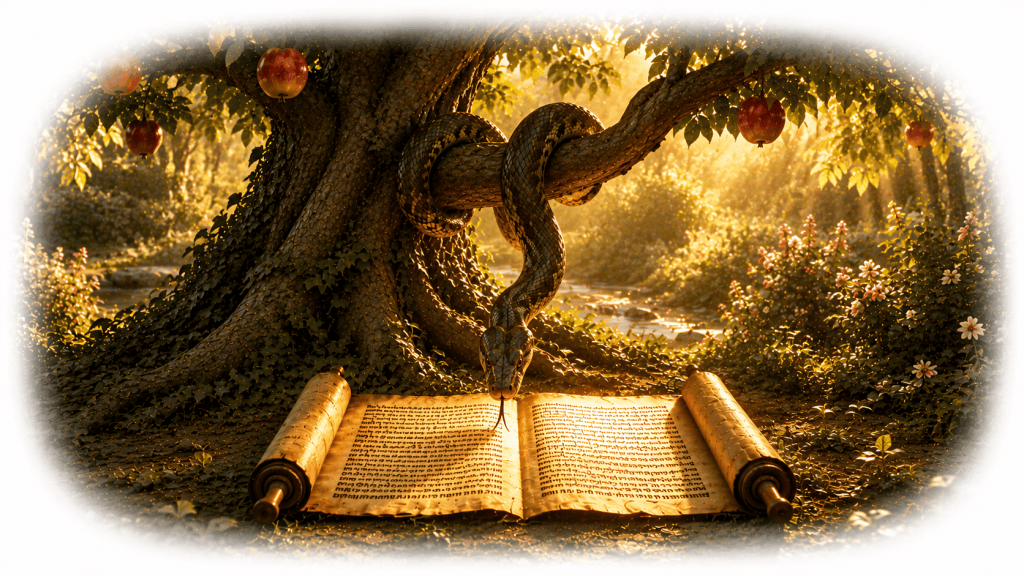
“Now the serpent was more subtil than any beast of the field which the LORD God had made. And he said unto the woman, Yea, hath God said…?” (Genesis 3:1).
The first recorded words of the enemy in all of Scripture. Not a denial of God’s existence. Not a frontal assault on His power. A question; gentle, surgical, aimed with precision at the sufficiency and reliability of what God had spoken. Yea, hath God said? Did God really say that? Are you sure that is what He meant? Is that word you are standing on really as fixed as you think it is?
It worked in Eden. It is working today. And it is the oldest weapon in the war that never ends.
A Question That Will Not Go Away
There is a question that has haunted the church from its earliest days, and it has not grown quieter with the centuries. If anything it grows louder, it presses harder, it strikes with more sophistication, more cultural polish, and more ecclesiastical respectability than it ever has before. The question is this: how do we know which books truly belong in the Bible?
This is not a question reserved for seminaries and doctoral dissertations. It is a question the average believer faces in the pew, on the internet, in conversation with coworkers, and increasingly from within the walls of the church itself. It arrives wearing many costumes.
Sometimes it comes dressed as academic curiosity: have you heard about the Gospel of Thomas? Scholars say it may be older than Matthew.
Sometimes it comes wrapped in spiritual warmth: God spoke to me last night, and what He told me goes beyond what is written.
Sometimes it is more brazen: the Bible as we have it was assembled by Constantine’s political machinery. The real story was suppressed.
Each of these challenges, however different in tone, shares the same diabolical root. They all attack the canon. And to attack the canon is to attack the only anchor the church possesses. If you can convince a believer that the Bible they hold is unreliable, incomplete, or the product of human politics, you do not need to destroy their faith all at once. You simply need to set it adrift. Without a fixed, authoritative Word, every doctrine becomes negotiable, every moral command becomes optional, and every false prophet gains an audience.
That is why the serpent’s question was so effective. He did not have to deny the Word. He only had to make Eve uncertain of it. Yea, hath God said? And once the certainty cracked, everything else followed.
Why This Matters Now More Than Ever
We are living in a moment of unprecedented biblical erosion, attacked from outside and hollowed from within at the same time.
From the outside, critics and scholars hammer away at the historical reliability of Scripture. The canon, they say, was a fourth-century construction, a product of ecclesiastical power politics, a set of winners’ documents that suppressed the alternative voices. The Gnostic gospels were censored. The feminine traditions were erased. The Bible you hold is what the institution allowed to survive.
From the inside, an entire generation of professing Christians has been trained by entertainment, social media, and emotionally driven church culture to distrust their Bibles and to trust their feelings. The fastest-growing religious movement in the world, the New Apostolic Reformation and its charismatic offshoots, openly claims that God is still speaking with the same authority as Scripture, that living apostles and prophets carry binding divine revelation, and that the canon is therefore functionally not closed.
At the same time, Roman Catholicism continues to press its ancient claim that the church produced the Bible, and that the church therefore stands in authority over the Bible. And a new wave of Gnostic-flavored spirituality, dressed in therapeutic language and progressive theology, whispers that the ancient church suppressed feminine voices, alternative gospels, and diverse revelatory traditions in the name of power.
These are not fringe challenges. They are the dominant questions of our cultural moment. And the answer to all of them is the same: the canon. A fixed, closed, divinely preserved canon of Scripture, recognized, not created, by the faithful; tested in the fire of persecution and heresy; and sufficient for everything the people of God need until the Lord returns.
The Distinction That Runs Through Everything
The first thing that must be established, and the theme that will run through every day of this series and every chapter of the book, is the difference between two words: creation and recognition. The church did not create the Bible. God created the Bible. The church recognized it.
This distinction is not semantic. It is the difference between a church that stands under the Word in submission and a church that stands over the Word in authority. When the Roman Catholic Magisterium declares that it defined the canon, it is asserting the second position: the church is the judge of Scripture. When Protestant believers confess Sola Scriptura, they are asserting the first: Scripture is the judge of the church.
And history vindicates the Protestant position. The books of the Old Testament were recognized as divine by Israel; tested by prophetic fulfillment, by covenantal consistency, by the authority of their human authors, long before any official council declared them canonical. The books of the New Testament were read in churches, copied, circulated, and treated as Scripture by the first and second generations of believers, long before any council met to list them. The councils of the fourth century did not breathe authority into these books. They acknowledged what the Holy Spirit had already impressed upon the hearts of God’s people across the Roman world.
“My sheep hear my voice, and I know them, and they follow me” (John 10:27).
The sheep recognized the Shepherd’s voice in these books. The councils documented that recognition. They did not manufacture it. This is the foundation. The next thirty days build the whole case on it.
What This Series Will Establish
Over the next thirty days, this series will trace the full historical and theological case for the closed canon.
What the canon is, and what recognition means. How the Old Testament canon was formed and what Jesus and the apostles recognized as Scripture. The question of the Apocrypha, why it was excluded, and why Rome added it at Trent. How the New Testament canon was recognized, from the apostolic generation to the councils. The specific criteria by which books were recognized. The rejected and false writings, the Gnostic gospels, the pseudepigrapha, the lost-books myth, and the specific reasons each was excluded. The sufficiency of the closed canon. And every modern challenge, the NAR’s functionally open canon, Rome’s Apocrypha, the secular skeptic’s Constantine myth, the counterfeit scriptures of our own moment, answered directly.
This is not a defensive exercise. It is the church’s oldest and most necessary work: contending for the faith once delivered by standing firmly on the Word that God settled in heaven before any council met on earth.
The war that never ends began with a question in a garden. Yea, hath God said? It is the same question, in a thousand new costumes, that the church answers in every generation.
Here is the answer. Thirty days of it. Beginning tomorrow, what the canon actually is.
“And he said unto the woman, Yea, hath God said…?” — Genesis 3:1 KJV
📖 This post is adapted from Canon and Covenant: How God Preserved His Word Through History. If it helped you, the full book is available on Amazon — or you can support this ministry directly.
📖 Biblicism: The Faith Once Delivered — the previous volume — Get Biblicism →
thefinalconvergence.com | Follow on Instagram, Facebook, X, and YouTube
If you like to be updated on new blogs, sign up to our newsletter!


Leave a Reply