
Published: September 1, 2026 | thefinalconvergence.com
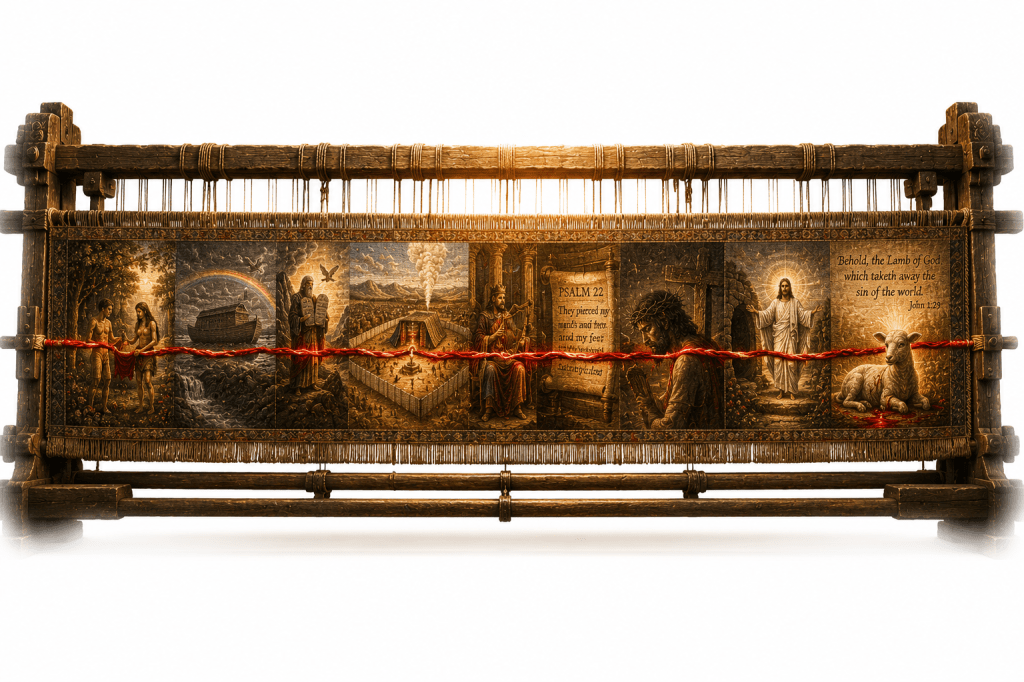
We have reached the midpoint. Fifteen days behind us, fifteen ahead. And it is the right place to stop, stand back, and see what has been built, because with today the second great section of the canon falls into place, and the whole picture comes into view.
The Old Testament: thirty-nine books, recognized by the covenant people, confirmed by Christ, settled before the church existed. The New Testament: twenty-seven books, spread organically from scrolls to Scripture, recognized by clear criteria, affirmed by the councils, and closed by God Himself when the apostolic foundation was complete.
Thirty-nine plus twenty-seven. Sixty-six books. The canon, complete and closed.
“Beloved, when I gave all diligence to write unto you of the common salvation, it was needful for me to write unto you, and exhort you that ye should earnestly contend for the faith which was once delivered unto the saints” (Jude 3).
Once delivered. The Greek word carries the force of once for all, delivered a single time, completely, never to be delivered again. The faith was not handed to the church in installments, with more arriving in every generation. It was delivered once, for all time, to the saints. And a faith once delivered is a faith you contend for, you do not add to it, and you do not let anyone subtract from it. The closed canon is the written form of the faith once delivered.
What the New Testament Section Established
Walk back through the last five days and watch the case complete itself.
The writings spread organically, not politically (Day 11). Within decades of the ascension, the same core body of apostolic writings was recognized, copied, and read as Scripture from Jerusalem to Rome, with no printing press, no postal service, no central authority imposing it. Paul’s letters were recognized as Scripture in Peter’s own lifetime. The pattern was not political manipulation. It was the Spirit working in God’s people to recognize what He had spoken.
The recognition ran on clear criteria (Day 12). Apostolic origin, doctrinal consistency, universal reception, and the marks of divine life and power. These four tests did not grant authority, they identified it, the way a jeweler’s eye detects a diamond it did not create. The forgeries failed the very criteria they tried to counterfeit; the genuine books passed because the authority was already in them.
The councils affirmed the ancient landmark (Day 13). Nicaea produced no canon list and settled no canon question, the Constantine myth is fiction. The Muratorian Fragment shows the canon recognized a century before Nicaea. And East and West, divided in everything else, converged on the same twenty-seven books independently, exactly what recognition under one Spirit predicts, and exactly what political imposition cannot explain.
And God closed the canon (Day 14). Not a council, not a pope, God, when He finished speaking through the apostolic foundation laid once and for all (Ephesians 2:20). The church was created by the Word and stands under it, never over it. The line was drawn by God’s own hand, and no human hand can move it.
Four days, and the New Testament canon stands as secure as the Old. Both testaments recognized, not created. Both closed, not open. Both the faith once delivered.
The Whole Canon in View
Now lift your eyes to the whole. This is the moment the two halves become one.
Sixty-six books, written across roughly fifteen centuries by some forty authors, kings and shepherds, prophets and fishermen, a physician, a tax collector, a tentmaking rabbi, in three languages, on three continents, most of whom never met one another. And out of that impossible diversity comes a single, unbroken story: creation, fall, covenant, promise, incarnation, cross, resurrection, church, and the new creation where God dwells with His people forever. Genesis opens the wound; Revelation heals it. The scarlet thread of the blood of the covenant runs unbroken from the skins God made to cover Adam to the Lamb slain from the foundation of the world.
No committee produced that unity. No editor imposed it across fifteen centuries and three continents on authors who never coordinated. That coherence is the fingerprint of a single divine Author working through many hands, the strongest internal evidence that these sixty-six books are exactly what they claim to be: the Word of the living God, recognized by His people because His Spirit bore witness to what His Spirit had inspired.
And the same principle governs both testaments, start to finish. Israel did not create the Old Testament canon; she recognized it. The church did not create the New Testament canon; she recognized it. From Sinai to Patmos, the pattern never changes: God speaks, and His people, hearing the Shepherd’s voice, recognize what He has spoken. Recognition, not creation, from the first page to the last.
Why the Closed Canon Is the Church’s Treasure
A closed canon of sixty-six books is not a limitation the church has to apologize for. It is the church’s greatest earthly treasure, and it is good news in at least three ways.
It means the question what has God said? has a definitive answer. You do not have to wait for the next council, the next pope, the next prophet, or the next revelation to know the will of God. It is finished. It is written. It is in your hands. The faith was once delivered, you possess it complete.
It means every claim can be tested. Because the canon is closed and fixed, it functions as the measuring rod that Day 2 described, the standard against which every new teaching, every claimed revelation, every tradition of men can be measured. An open canon has no fixed standard; everything is negotiable. A closed canon gives the sheep a sure rule by which to know the Shepherd’s voice from the stranger’s.
And it means you are secure. No one can come to you and say God told me something that overrides what is written, and have any claim on your conscience. The Book is complete. The covenant is sealed. The foundation is laid. You can build a life, a family, and an eternity on these sixty-six books, because God built them to bear exactly that weight, and then He closed the door, so that nothing false could be slipped in beside them.
The Turn Ahead
The first half of this series has been almost entirely constructive, building the positive case for the canon we have. The Old Testament recognized and confirmed. The New Testament recognized and closed. The whole sixty-six settled, secure, and sufficient.
But a treasure this valuable is always contested. And there is a whole body of writing that was produced precisely to imitate Scripture, to compete with it, and in our own day to be paraded as the suppressed or lost books the church supposedly feared. The Gnostic gospels. The pseudepigrapha. The endless modern claims that the real story was hidden and only now revealed.
If the canon is the diamond, these are the glass and paste. And the church has always needed to tell the difference. So the second half of the series turns from what belongs in the canon to what does not, and why. Tomorrow the rejected and false writings, beginning with the Gnostic gospels.
The faith was once delivered. In the days ahead, we contend for it, by learning to recognize the counterfeits that have always gathered around the genuine Word.
“Earnestly contend for the faith which was once delivered unto the saints.” — Jude 3 KJV
📖 This post is adapted from Canon and Covenant: How God Preserved His Word Through History. If it helped you, the full book is available on Amazon — or you can support this ministry directly.
thefinalconvergence.com | Follow on Instagram, Facebook, X, and YouTube
If you like to be updated on new blogs, sign up to our newsletter!


Leave a Reply