
Published: September 16, 2026 | thefinalconvergence.com
Thirty days ago this series opened in a garden, with the oldest question ever asked: Yea, hath God said? Today it closes where the whole of Scripture closes, at the final words of the final book, where the canon seals itself.
“For I testify unto every man that heareth the words of the prophecy of this book, If any man shall add unto these things, God shall add unto him the plagues that are written in this book: And if any man shall take away from the words of the book of this prophecy, God shall take away his part out of the book of life” (Revelation 22:18-19).
There could be no more fitting place to end a series about the canon than the place where the canon ends, and where it locks its own door. The very last book, in nearly its very last words, pronounces a solemn warning against the two things this whole series has traced: adding to the Word and taking away from it. The Book closes itself. It needs no council to seal it and permits no prophet to reopen it. If any man shall add… if any man shall take away. The canon’s final act is to guard its own completeness. And thirty days of study have simply been the church learning to hear and honor what the Word already said about itself.
What These Thirty Days Have Traced
Look back over the ground we have covered.
We began with the war that never ends, the enemy’s oldest strategy of the competing word — and the thesis that has held from the first day to the last: the church recognized the canon; it did not create it. We watched the Old Testament settle before the church existed, confirmed by Christ Himself from Abel to Zacharias. We watched the New Testament spread organically from scrolls to Scripture, recognized by clear criteria, affirmed by councils that documented rather than invented, and closed by God when the apostolic foundation was complete. We answered the Apocrypha and the Gnostic gospels, the Constantine myth and the lost-books legend. We stood on the sufficiency of the closed canon, honored the King James Bible as a monument of preservation, and faced the canon’s attackers in our own day, the NAR’s functionally open canon, the progressive revision, the extra-canonical systems, and the quiet cosmological subtraction.
And then we turned from the attacks to the response: the call to stand, the character of the remnant, the believer who holds the Word when everything around them lets go, and the summons to be Bereans who search the Scriptures to see whether these things are so.
Thirty days. One conclusion. The canon of Scripture is not a human invention but a divine gift, inspired, recognized, preserved, closed, sufficient, and sealed by the Word’s own hand against every addition and every subtraction.
The Foundation Complete
This series is also the capstone of something larger. It is the fifth movement in a single, deliberate progression.
What Is Truth? asked whether truth exists and where it is found. The Simplicity That Is in Christ recovered the uncluttered gospel. Why I Believe the Bible gave the reasons for confidence in the Book. Biblicism established that the Word alone, Sola Scriptura in its fullness, is the believer’s final authority. And Canon and Covenant has now answered the question those first four make unavoidable: if the Bible alone is our authority, which books are the Bible?
Sixty-six. Settled. And with that answer, a foundation is complete. Truth exists. The gospel is simple. The Bible is trustworthy. The Word alone is our authority. And the Word is these sixty-six recognized books, no more, no less, sealed against tampering by the God who gave them.
That is solid ground. It is meant to be stood on, and built upon.
A Closing Doxology
And so, before we look ahead, we look up. Because a study of the canon that ended in mere information would have missed the entire point. The right response to the Word of the living God is not only understanding. It is worship.
To the God who spoke, who at sundry times and in divers manners spoke to the fathers by the prophets and in these last days by His Son, be glory. To the God who breathed out pure words, purified seven times, and committed Himself to keep them, be glory. To the God who guided His people to recognize His voice, who closed the canon with His own hand, who preserved His Word through fire and flood and empire, who has never let one jot or tittle fall, be glory. The empires that burned Bibles are dust, and the Word endures. The false prophets who buried it under their own words are forgotten, and the Word endures. Every hand that ever reached to add to it or take from it has withered, and the Word endures.
Now unto him that is able to keep you from falling, and to present you faultless before the presence of his glory with exceeding joy, to the only wise God our Saviour, be glory and majesty, dominion and power, both now and ever. Amen (Jude 24-25).
The Word kept us. That is the testimony of every believer who ever stood on it. We did not hold the Word up by our strength, it held us up by its truth. And the God who authored it, preserved it, and gave it to us will keep us by it, and present us faultless at the last, with exceeding joy. To Him be the glory.
The Journey Ahead — Which Bible Can You Trust?
The canon is settled. The foundation is laid. And now the field opens.
Over these final days the series has pointed steadily toward the question that follows once you know which books: the question of which words. Within those sixty-six recognized books, on the page in front of you, in the translation you read every morning, are the words the words God actually spoke? We traced the shape of it: the two great streams of manuscripts, the received text the church used for fifteen centuries and the critical text that reshaped modern Bibles, and the honest questions that separate them. God spoke pure words and promised to preserve them, so where are the purest preserved words found?
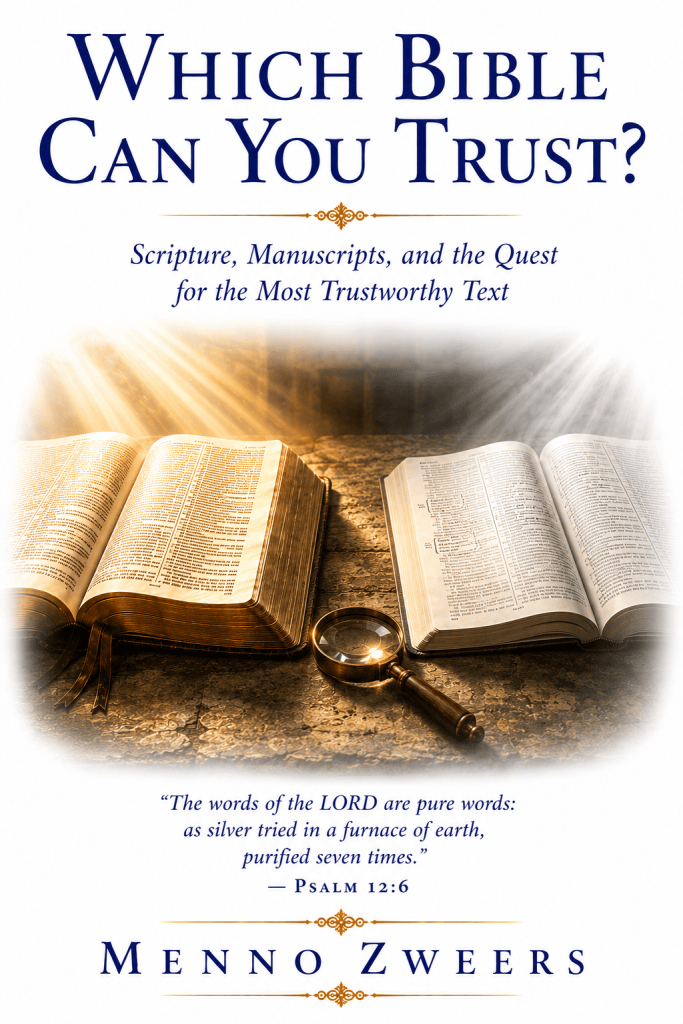
That is the whole subject of the next volume, and today it launches: Which Bible Can You Trust? — Scripture, Manuscripts, and the Quest for the Most Trustworthy Text.
It follows the evidence, honestly, carefully, without denominational combat and without claiming any translation fell from heaven, into the manuscripts behind the translations, the history of how the modern texts were assembled, the men who assembled them and what they believed about the Bible, the commercial machinery behind the Bibles on the shelves, and the real differences between the versions in circulation today. Some of what it finds is sobering. But its aim is the same aim this series has held from the first day: not fear, but Berean confidence, to know rather than assume, to search rather than trust blindly, and to hold the pure Word with open eyes.
If Canon and Covenant has served you, the next volume is written for exactly the reader you have become over these thirty days: the one who will not take the Word secondhand, who searches to see whether these things are so. The canon told us which books. Which Bible Can You Trust? asks which words. And that examination begins now.
Even So, Come
Thirty days ago we started in a garden with a question meant to make us doubt God’s Word. We end with the Word vindicated, complete, sealed, and worthy of all our trust, and with a hunger to know it more deeply, down to its very words.
The grass withers and the flower fades. Empires rise and fall. Movements surge and collapse. But the Word of our God shall stand for ever. It stood before we were born. It will stand when we are gone. And it will be standing, unbroken and undiminished, when the One whose words they are returns to claim His own.
He which testifieth these things saith, Surely I come quickly. Amen. Even so, come, Lord Jesus (Revelation 22:20).
Thank you for walking these thirty days. Now, buy the truth, and sell it not. And carry on into the next question with the same readiness of mind.
“If any man shall add unto these things… and if any man shall take away from the words of the book of this prophecy…” — Revelation 22:18-19 KJV
📖 This post is adapted from Canon and Covenant: How God Preserved His Word Through History. If it helped you, the full book is available on Amazon — or you can support this ministry directly.
📖 Which Bible Can You Trust? Scripture, Manuscripts, and the Quest for the Most Trustworthy Text — the journey continues Get the next volume →
thefinalconvergence.com | Follow on Instagram, Facebook, X, and YouTube
If you like to be updated on new blogs, sign up to our newsletter!


Leave a comment