
Published: June 22, 2026 | thefinalconvergence.com
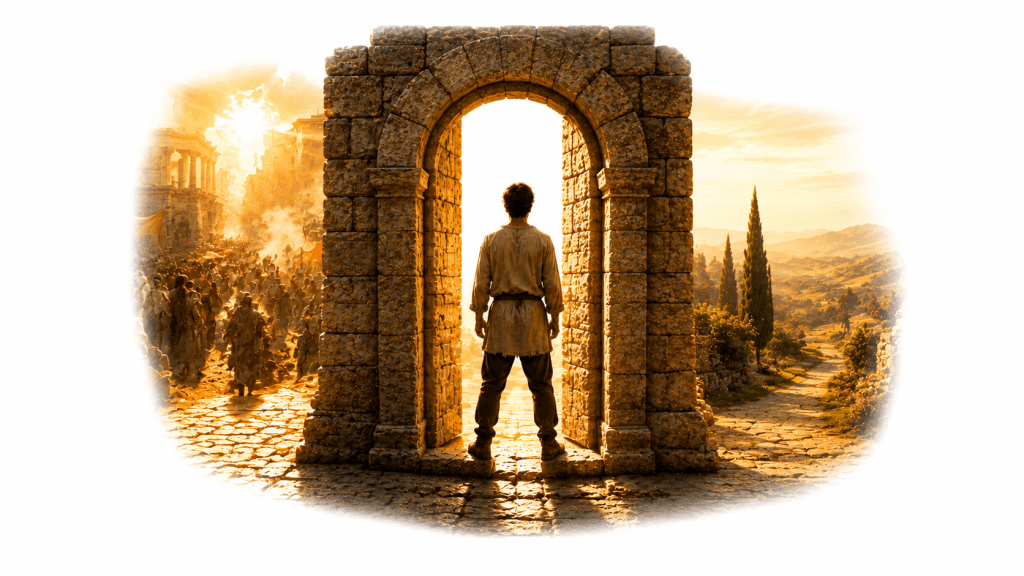
People who leave movements tend to describe the moment of departure as if it were a single event. A confrontation, a revelation, an encounter that changed everything in an afternoon. The dramatic pivot that makes for a clean narrative. My leaving was not like that.
It was a slow erosion, three years of accumulating cracks, of questions that could not be answered satisfactorily, of reading the text and finding it saying something the overlay could not accommodate. And then a series of specific moments, none of them individually decisive but collectively final, that pushed me through a doorway I could not find the way back through.
The turning was not a single step. It was the recognition, standing in the middle of the process, that I had already turned. That the direction of my life had quietly shifted, not in a moment of dramatic decision but through the patient, insistent pressure of the plain Word of God pressing against a framework that could not hold it.
The Moment Isaiah 8:20 Became Unavoidable
Every turning has a text. The text that would not let go. The verse that kept returning, that pressed through the overlay with a force the overlay could not redirect, that finally stood in the path of the framework and refused to move.
For me, across the years of the turning, the text was Isaiah 8:20: “To the law and to the testimony: if they speak not according to this word, it is because there is no light in them.” This verse is Isaiah’s response to the Israelites who were consulting mediums and spiritists, who were seeking guidance from voices that claimed to speak from the spiritual realm. And his instruction is not test their track record or evaluate their apostolic credentials or discern the spirit behind their words. His instruction is the most radical and the most simple:
To the law and to the testimony. Bring it to the Word. If it does not align with the Word, it is because there is no light in them. Not little light. Not filtered light. No light. This verse ended the framework for me. Not immediately, the recognition of what it meant took time to complete its work. But once it settled, it could not be unsettled.
Because the test Isaiah prescribed is a test the prophetic culture, applied consistently, fails. Not because every prophetic word ever given in the charismatic or NAR world was explicitly unscriptural. Some were. But because the structural claim of the prophetic culture, that there are living voices who receive and deliver divine revelation with an authority equivalent to or supplementary to the written Word, is itself a claim that Isaiah 8:20 does not permit.
The law and the testimony are the standard. Every voice is measured by them. No voice stands alongside them. No voice supplements them. Any voice that claims to speak for God is brought to the Word, and if it speaks not according to the Word, it is darkness. The moment that verse stopped being a verse I read and became a conviction I lived by, that was the turning.
What the Text Said Without the Glasses
The second element of the turning was simpler and more quiet than the Isaiah 8:20 confrontation. It was the experience of reading the Bible without the overlay for the first time.
I cannot specify the exact moment. It happened gradually, as the framework loosened, as the questions accumulated, as the specific redirections of the communities I was part of made the honest question more rather than less urgent. At some point I began reading the text with a different question than I had ever brought to it.
Not, what does this mean within the charismatic framework? Not, how does this text confirm the theological conclusions the community has already reached? But, what does this say? Simply. As it stands. On its own terms. What happened when I read it that way was not what I expected.
I expected confusion, the chaos that the framework had always warned would follow if you tried to read the Bible without apostolic interpretation to guide you. What I found was clarity. Not complete clarity on every question, the Bible is a deep book, and honest engagement with it produces genuine questions alongside genuine answers. But on the questions that the framework had claimed to answer, the question of tongues as evidence, the question of ongoing apostolic authority, the question of the canon’s sufficiency, the question of whether the believer needs living prophetic guidance to navigate the Christian life, the plain text was not ambiguous.
It was clear. Consistently, repeatedly, across multiple passages, in multiple letters, in the voice of multiple New Testament authors, clear.
The Spirit distributes gifts as He will. Not all speak in tongues. The foundation was laid once. The Word of God, as given, is sufficient to thoroughly furnish the man of God for every good work. The canon is closed. Add not to these words.
I had been told that reading the Bible without apostolic guidance would lead me into error. What reading it without apostolic guidance actually led me into was the discovery that the apostolic guidance I had received was frequently leading me away from what the apostolic text said.
The Community’s Response
When the turning became visible, when the questions I was asking were specific enough and the conclusions I was reaching were clear enough that the community could no longer accommodate them, the response followed the pattern I had seen applied to others who had asked the uncomfortable questions.
The spiritual authority was invoked. Not to engage the textual questions I was raising, but to frame the act of raising them as a spiritual problem. You are in deception. You have opened yourself to a religious spirit. You are leaving the covering. You are walking out from under the authority God has placed over your life.
The relational pressure was applied. Long relationships became strained. The warmth of community; genuine, real, something I had known and valued for years, became contingent on the maintenance of the framework. The message was not always spoken, but it was consistently clear: the community is available to you as long as you remain within its theological boundaries.
I want to be precise about something here. Most of the people who applied this pressure were not malicious. They were sincere. They genuinely believed that what they were doing was protecting me from spiritual harm. The framework they were operating within told them that departure from apostolic authority was dangerous, that the person who left the covering was exposed to the enemy in ways that submission to spiritual authority protected against. They were applying the logic of the framework. The problem was the framework.
And the framework’s response to the person who challenged it from Scripture, not from personal preference, not from rebellion, not from the desire to be free of accountability, but from the plain text of the Word, was to invoke the authority the framework had placed above the Scripture. That response, more than any specific theological argument, was the final confirmation that the framework could not stand.
What Was Found on the Other Side of the Door
The other side of the door was quieter than I expected. Not empty, the evangelical world has its own richness, its own community, its own genuine engagement with Scripture. Not perfect, the problems I would eventually identify in confessionalist structures that claimed Sola Scriptura while practicing something else would come later. But quieter than the charismatic world. Calmer. With a different quality of assurance.
Not the assurance of the prophetic word that told me what God was saying to my specific situation this week. The assurance of the text that told me what God had said, definitively, permanently, with the authority of the one who cannot lie, about the condition of every person who genuinely repents and genuinely trusts in Christ.
“These things have I written unto you that believe on the name of the Son of God; that ye may know that ye have eternal life” (1 John 5:13). That ye may know. Not by the confirmation of the prophetic word. Not by the witness of the apostolic authority. By what has been written. The specific testimony of the specific text.
The Word I found on the other side of the door was the same Word I had been given before the framework was placed over it. The same sixty-six books. The same promises. The same gospel. The same Christ. But now it was speaking on its own terms. Without the overlay. Without the glasses. Without the apostolic interpretation telling me what it meant before I had a chance to find out what it said. And what it said, read plainly, read carefully, read with the urgency of someone who genuinely needed to know, was everything the framework had been filtering.
The simplicity that Paul feared would be corrupted. The finished work that the framework had been supplementing. The sufficient Word that the voices had been claiming to complete. It was there. It had always been there.
“The entrance of thy words giveth light; it giveth understanding unto the simple.” — Psalm 119:130 KJV
Tomorrow, Day 5, what Sola Scriptura cost. And what it gave that nothing else could give.
📖 This post is adapted from Why I Believe the Bible: A Personal Defense of Sola Scriptura. If it helped you, the full book is available on Amazon — or you can support this ministry directly.
thefinalconvergence.com | Follow on Instagram, Facebook, X, and YouTube
If you like to be updated on new blogs, sign up to our newsletter!


Leave a comment