
Published: June 21, 2026 | thefinalconvergence.com
The glasses were perfect for years. That is the honest thing to say. The framework I described yesterday, the charismatic and NAR interpretive overlay that filtered every biblical text through the lens of ongoing prophetic authority, apostolic governance, and evidential supernatural experience, functioned seamlessly for a long time. It produced a coherent world. A world with clear answers to the questions every person needs answered: Is God present? Is He active? Is He speaking? Is He moving in my community, in my life, in history?
Inside the framework, every one of those questions had a confident answer. Yes. The prophetic word last Sunday was evidence of His presence. The healing that happened in the prayer line was evidence of His activity. The apostolic declaration over the church was evidence of His speaking. The movement’s growth was evidence of His moving.
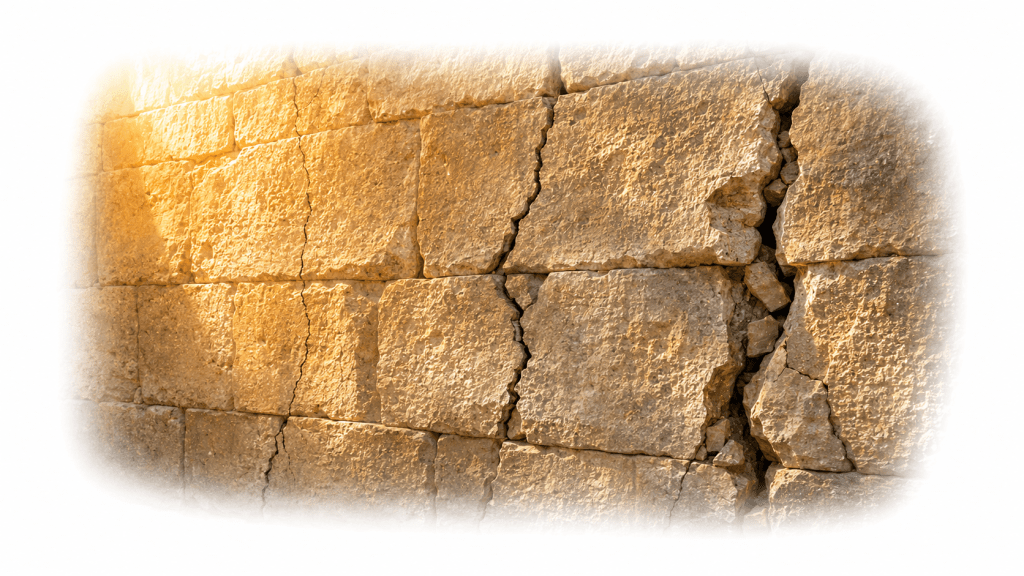
The world was warm and coherent and full of divine activity. And then, slowly, in ways that were first easy to dismiss and then impossible to ignore, the cracks began.
The First Crack: The Prophecies That Didn’t Come True
Every system has a moment of pressure that reveals whether its foundations are load-bearing. For the prophetic culture, that moment is the failed prophecy.
The prophetic culture I was formed by was generous with prediction. Directional words about the community’s future. Personal words about individual destinies. National words about political and cultural outcomes. Words given with the full confidence of thus saith the Lord, with the specific, declarative authority of someone who claimed to have received divine revelation.
And some of them were wrong. Not all. I want to be careful here, because the response of the person whose prophetic framework is being challenged is to demand absolute precision, and I am not claiming absolute precision. Some prophetic words were vague enough to be unfalsifiable. Some were specific enough to be tested and appeared to be confirmed. The charismatic world is not entirely without genuine spiritual experience, and I have never claimed otherwise. But some of them were wrong. Specifically, unambiguously, documentably wrong.
The most public examples, the ones that are hardest to dismiss because they were broadcast publicly, confidently, and with the specific claim of divine authority, are the prophecies surrounding the 2020 United States presidential election. Multiple recognized prophetic voices within the NAR and broader charismatic world, figures with large platforms, apostolic credentials, and networks of accountability within the movement, declared, with specific and confident language, that Donald Trump would serve a second consecutive presidential term. He did not.
The framework demanded a response. And the responses were revealing. Some prophets apologized. But many did not, and the more instructive responses were the ones that doubled down, reframed, or produced theological mechanisms for explaining why the specific failure of a thus saith the Lord prophecy did not disqualify the prophet who gave it.
The mechanisms were creative. Perhaps the church had not prayed sufficiently to sustain the prophetically declared outcome. Perhaps the enemy had interfered with what God had declared. Perhaps the prophecy was conditional in ways that had not been made clear at the time of delivery.
Every one of these explanations has the same structure: it preserves the authority of the prophetic voice by relocating the failure to something other than the prophet. The system is designed to be unfalsifiable. A prophecy that comes true confirms the system. A prophecy that fails is explained by the system. There is no outcome that challenges the system itself.
That self-sealing quality, the inability of any evidence to challenge the authority of the prophetic voice, was the first crack I could not close.
The Second Crack: The Question That Was Not Welcome
The first crack opened a question. The question was not hostile. It was honest. And it was the most natural question a person who claimed to believe in a God who had spoken could possibly ask.
But what does the Scripture say? Not, what does the prophetic tradition say the Scripture means. Not, what has the apostolic network determined the Spirit is saying in this season. What does the text say? The specific words on the specific page of the specific book.
What I discovered, and this was more disorienting than the failed prophecies, was that this question was not always welcome Not everywhere, and not always. There were leaders within the communities I was part of who genuinely engaged the text and would genuinely engage my questions about it. I do not want to paint with a brush too broad. But there was a pattern, consistent enough across enough contexts to be significant, in which honest textual questions were met not with exegesis but with redirection The redirection took several forms.
Sometimes it was spiritual: You need to pray into this more. You need to be more open to what the Spirit is saying. The implication being that the honest question itself was a symptom of spiritual insufficiency, that a more Spirit-filled person would not be asking it.
Sometimes it was relational: This is not the posture of someone who is submitted to spiritual authority. The question itself is divisive. The implication being that asking about the text’s plain meaning was a form of rebellion against the apostolic authority that governed the community’s interpretation.
Sometimes it was theological: You’re reading the Bible through a religious spirit. What God is doing now requires a fresh understanding. The implication being that the plain text was a less reliable guide than the movement’s current prophetic revelation.
In every case the effect was the same: the question about the text was used to evaluate the questioner rather than to engage with the text. The person who asked “but what does Scripture say?” was identified as spiritually deficient, not because they were, but because the question, if pursued honestly, posed a threat to the system the redirection was protecting.
The Third Crack: What the Text Actually Said
Despite the redirection, and in some ways because of it, I kept reading. There is something that happens when you read the Bible with the specific urgency of someone who genuinely needs to know what it says rather than what they have been told it says. The text begins to speak on its own terms. Not always comfortably. Not always in the direction you were hoping. But clearly, with a specificity and a consistency that the overlay of tradition had been muffling.
The specific texts that pressed hardest against the framework were not obscure. They were the texts the framework used most frequently, but which, when read in context and without the overlay, said something different from what the overlay claimed.
“Do all speak with tongues? do all interpret?” (1 Corinthians 12:30). The Greek particle mē prefacing each question, demanding a negative answer, was not something the charismatic interpretation acknowledged. The framework required the answer to be “Yes, all should, it is the normative evidence.” The text required the answer to be “No, the Spirit distributes as He will.”
“And are built upon the foundation of the apostles and prophets, Jesus Christ himself being the chief corner stone” (Ephesians 2:20). The framework read this as describing the ongoing work of restored apostles and prophets. The text, when read with the word foundation given its architectural meaning, the layer laid once, at the beginning, not continuously, said something the framework could not accommodate.
“Beloved, believe not every spirit, but try the spirits whether they are of God: because many false prophets are gone out into the world” (1 John 4:1). The command to test, not to receive, not to submit, not to honor the spiritual authority of the prophet, but to test, was not the posture the prophetic culture modeled or taught. The culture honored prophetic voices. The text commanded the testing of them.
These were not conclusions I was looking for. They were conclusions that the plain text of the Word kept pressing on me, insistently, repeatedly, with the consistency that the Reformers identified as the testimony of the Spirit to the meaning of His own Word.
The Cost of Noticing
I want to be honest about what it feels like to begin to see the cracks. It does not feel like liberation. Not at first. It feels like loss. Because the world that the framework provides, warm, coherent, full of divine activity, with clear answers to the questions every person needs answered, is a world you do not leave easily or willingly. It is the world of the people you love. The worship you have known since childhood. The language of encounter and presence and the Spirit’s movement that has been the vocabulary of your most significant spiritual experiences.
To begin to see that the framework has been filtering the plain text is not to conclude that none of those experiences were real. They were real. The community was real. The genuine seeking of God was real. Many of the people inside those communities love God with a depth and sincerity that shames much of what passes for evangelical Christianity in its more theologically precise but experientially desiccated forms.
But the framework that shaped their interpretation of Scripture was not the plain text. And recognizing that, beginning to notice the cracks, beginning to ask the question that was not welcome, was the beginning of a process that would take years, cost deeply, and produce something on the other side that I could not have imagined from inside the world I was leaving.
The Bereans in Acts 17 received the Word with all readiness of mind, and then searched the Scriptures daily whether those things were so. They were called noble for it. Not arrogant. Not spiritually deficient. Noble, because they trusted the text above the authority of the teacher, even the apostolic teacher. That is the posture the cracks were pushing me toward. I did not know yet how far the push would go.
Tomorrow, Day 4, the turning. The moment the framework could no longer hold.
“These were more noble than those in Thessalonica, in that they received the word with all readiness of mind, and searched the scriptures daily, whether those things were so.” — Acts 17:11 KJV
📖 This post is adapted from Why I Believe the Bible: A Personal Defense of Sola Scriptura. If it helped you, the full book is available on Amazon — or you can support this ministry directly.
thefinalconvergence.com | Follow on Instagram, Facebook, X, and YouTube
If you like to be updated on new blogs, sign up to our newsletter!


Leave a comment