
Published: July 2, 2026 | thefinalconvergence.com
This attack is the most personally significant in the series. Not because it is the most philosophically sophisticated, it is not. Not because it is the most historically documented, it is not. But because it is the specific claim that sustained the world I was formed in for nearly four decades. And the way it is framed, you are putting God in a box, carries a particular rhetorical force that makes it very difficult to answer inside the community that deploys it.
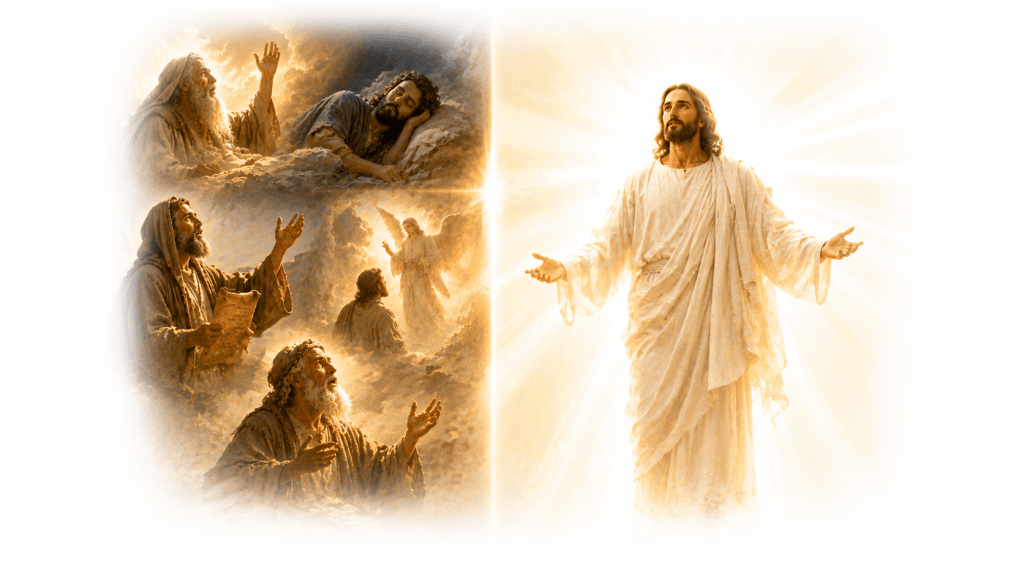
The argument in its strongest form: The Holy Spirit is not limited to a printed book. God spoke to Abraham, to Moses, to Isaiah, to Ezekiel, to Daniel, through visions, dreams, direct words, angelic visitations. The New Testament records the gift of prophecy given to the church at Corinth, to Philip’s daughters, to Agabus. Acts 2:17-18 quotes Joel: “your sons and daughters shall prophesy, your young men shall see visions, your old men shall dream dreams.” This is the era of the Spirit, the age in which the Spirit is poured out on all flesh. The cessationist who says God stopped speaking in 70 AD or at the close of the canon is not reading the Bible carefully. They are imposing a tradition, ironically, on the plain text, telling God when He is and is not allowed to speak. God is not in a box. The Spirit blows where He wills.
This argument has genuine emotional and rhetorical power. It sounds like it is defending the sovereignty of God against a theological tradition that has domesticated Him. It sounds like it is the maximally open, maximally Spirit-welcoming position. It is not. And understanding why it is not is one of the most important theological clarifications available to the person coming out of the charismatic or NAR world.
The Mode of Speaking Has Changed
The most important text for understanding the relationship between the Spirit and the Word in the new covenant era is Hebrews 1:1-2: “God, who at sundry times and in divers manners spake in time past unto the fathers by the prophets, hath in these last days spoken unto us by his Son, whom he hath appointed heir of all things, by whom also he made the worlds.”
Two modes of speaking. Two eras.
The first: in time past…by the prophets. God spoke through many prophets. At various times. In various manners. Through the full range of prophetic mediation, visions, dreams, direct speech, angelic messengers, the audible divine voice. This was the era of progressive prophetic revelation, the long unfolding of the redemptive plan through the centuries of the Old Testament.
The second: in these last days…by his Son. The new covenant era, the era inaugurated by the Incarnation, the Cross, the Resurrection, and the Spirit’s outpouring at Pentecost, is the era of the Son’s speaking. Not further prophetic mediation supplementing what has been spoken. The final, complete, definitive speaking through the Son.
The Greek word translated hath spoken in verse 2 is elalēsen, aorist tense, indicating completed action. God has spoken. Not: God speaks and will continue to speak through ongoing prophetic mediation in the new covenant era. God has spoken, in and through His Son, in the completed, definitive revelation that the Son’s ministry, death, resurrection, and ascension constitute.
The writer of Hebrews is not saying that God never speaks again. He is saying that the mode of progressive prophetic revelation, the “sundry times and divers manners” of the Old Testament era, has been fulfilled and superseded by the complete speaking of the Son. The Son’s revelation is final. Not because God ran out of things to say but because He said everything in the one through whom all things were made.
The Spirit Does Not Speak Beyond the Word He Inspired
The charismatic claim is that the Spirit speaks beyond the canon, that fresh prophetic revelation supplements the written Word. But this claim has a fundamental problem that no charismatic theology has ever satisfactorily resolved.
If the Spirit is the one who inspired the sixty-six books of Scripture, and the Scripture claims this explicitly (2 Peter 1:21, 2 Timothy 3:16), then the Spirit is the author of the sufficient, complete, closed Word. The Spirit declared the Word sufficient. The Spirit declared the Word closed. The Spirit, speaking through Jude, wrote the faith once delivered. The Spirit, speaking through the author of Revelation, wrote add not to these words.
A fresh prophetic word that supplements the sufficient Word would be the Spirit contradicting what the Spirit already declared. The Spirit testifying to the sufficiency and closure of the canon would be the same Spirit who then went around the closure to speak new revelation. The Spirit who is not at war with Himself cannot both declare the canon sufficient and then declare it insufficient through ongoing fresh revelation.
This does not mean the Spirit is inactive after the canon closes. The Spirit illuminates the text, that is His ongoing work in the life of every believer. The Spirit produces conviction, comfort, joy, wisdom, and transformation through the engagement with the sufficient Word. The Spirit applies the finished revelation to the specific situation of the specific believer with the kind of personal precision and pastoral accuracy that demonstrates His active and ongoing presence.
But illuminating the sufficient Word is not the same as adding to it. Applying the finished revelation to the specific situation is not the same as delivering new revelation that supplements what was declared finished.
The “God Is Not in a Box” Response
The most common charismatic response to the closed canon argument is: you are putting God in a box. You are telling God when He can and cannot speak. This response has rhetorical force but theological incoherence.
Consider: who declared the Word sufficient? God did, through 2 Timothy 3:16-17. Who declared the faith once delivered? God did, through Jude 3. Who said add not to these words? God did, through the author of Revelation 22:18.
If these declarations mean what they say, then the cessationist position is not putting God in a box. It is trusting what God declared about His own Word. The cessationist is not saying: God cannot speak. They are saying: God declared that He has spoken sufficiently, and I believe Him.
Now ask: who is actually putting God in a box?
The charismatic who insists that God’s ongoing prophetic declarations are necessary supplements to what He declared sufficient, is that person trusting God’s declaration or overriding it? The charismatic is effectively saying: I know God declared the Word sufficient and the canon closed, but God is too big to be limited by what He declared. This is not the maximally God-honoring position. It is the position that overrides God’s declaration of His Word’s sufficiency with a different claim about what God must be doing.
The genuinely God-honoring position is to take God at His word, that the Word He breathed out is sufficient, that the faith was once delivered, that the revelation is complete, that the Spirit who declared the canon closed does not then supplement it. That is not putting God in a box. That is trusting what God said about His own work.
The Prophetic Track Record and the Biblical Standard
There is also a practical dimension to this argument that cannot be avoided. Deuteronomy 18:20-22 establishes the biblical standard for prophetic authenticity: 100% accuracy. If a prophet speaks in the name of the LORD and the thing does not come to pass, that prophet has spoken presumptuously. The standard is not approximate accuracy, or mostly accurate, or accurate about the important things. The thing must come to pass.
The prophetic culture of the NAR and broader charismatic world has a documented track record of specific, public, confidently delivered prophetic failures, of which the 2020 election prophecies are only the most prominent. The standard Deuteronomy 18 requires would result in the disqualification of every major recognized prophetic voice in the movement.
Two possibilities: either the prophetic gift as practiced in the contemporary charismatic movement is not the prophetic gift the Bible describes, in which case the claim to Spirit-given revelation is false, or the prophetic gift as the Bible describes it has ceased and what is being practiced is a human imitation.
Either way, the claim that the Spirit is speaking new revelation through recognized prophetic voices in the contemporary charismatic movement is not established by the movement’s own track record against the movement’s own stated standard.
What the Spirit Actually Does
This is not a cessationist post in the sense of claiming that the Spirit is quiescent, sitting quietly and doing nothing beyond nudging believers toward moral improvement. The Spirit is powerfully, actively, personally at work in the life of every genuine believer.
He produces the fruit of Galatians 5. He intercedes through the believer’s prayer with groanings that cannot be uttered (Romans 8:26). He witnesses with the believer’s spirit to the reality of their adoption (Romans 8:16). He illuminates the text, making what was opaque clear, making what was general specific, applying the sufficient Word to the particular situation with the kind of pastoral precision that leaves the reader saying: that is exactly what I needed, from exactly the passage I would not have turned to on my own.
The Spirit’s work is vast, personal, powerful, and ongoing. It simply is not the work of supplementing the Word He declared sufficient with new revelation the closed canon cannot contain. “The Spirit and the bride say, Come” (Revelation 22:17). The Spirit, to this day, calls through the sufficient Word. Come. Come to the Word. Come to the Christ the Word proclaims. Come to the grace the Word offers. He calls through the Word. Not beyond it.
Tomorrow, Day 15, Attack #5: “Sola Scriptura Is Self-Refuting.”
“God…hath in these last days spoken unto us by his Son.” — Hebrews 1:1-2 KJV
📖 This post is adapted from Why I Believe the Bible: A Personal Defense of Sola Scriptura. If it helped you, the full book is available on Amazon — or you can support this ministry directly.
thefinalconvergence.com | Follow on Instagram, Facebook, X, and YouTube
If you like to be updated on new blogs, sign up to our newsletter!


Leave a Reply