
Published: July 4, 2026 | thefinalconvergence.com
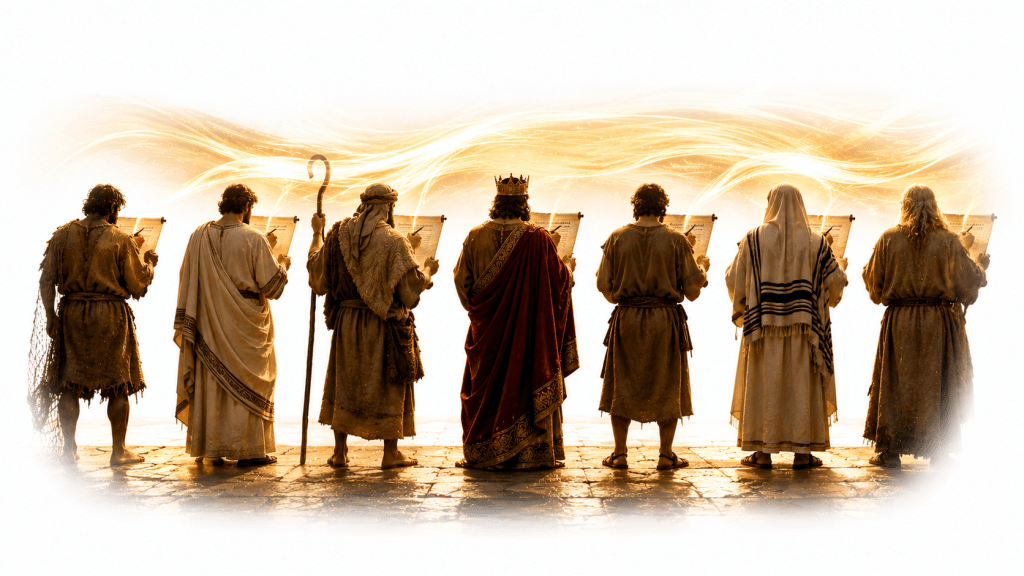
This attack is the one that feels most obviously true, because it is, in one important sense, obviously true. The Bible was written by human beings. Not angels. Not God dictating to passive stenographers. Actual human beings; a tax collector, a physician, a shepherd, a king, a tent-maker-turned-apostle, a fisherman, a priest, a prophet in exile by a river in Babylon. Men who lived in specific historical contexts, who wrote in specific languages shaped by those contexts, who brought their individual personalities, literary styles, theological emphases, and pastoral concerns to the texts they produced.
This is not a concession that weakens the Bible’s authority. It is a feature of the text that the doctrine of inspiration specifically accounts for. The question is not whether human beings wrote the Bible, they did. The question is what the Spirit was doing while they wrote it. And that question has an answer that is more precise, more satisfying, and more consistent with what we actually find in the text than the objection suggests.
What Verbal Plenary Inspiration Actually Claims
The objection assumes a specific understanding of how the Spirit-inspired text would look if it were genuinely divine, and then argues that the Bible does not look like that. The assumption is something like: a genuinely God-given book would be stylistically uniform, culturally transcendent, without the marks of individual personality, historical limitation, or literary development.
But this is not what the doctrine of verbal plenary inspiration claims. It claims something quite different: that the Spirit superintended the writing process in such a way that the specific words the human authors wrote are the specific words God intended to be in His Word, without overriding the genuine humanity of the authors or eliminating the genuine human character of the text. Two dimensions, held simultaneously:
Genuine human authorship. Luke researched his Gospel with the care of a careful historian — he says so himself: “It seemed good to me also, having had perfect understanding of all things from the very first, to write unto thee in order” (Luke 1:3). His historical method, his literary style, his particular concerns for Gentiles and for women and for the poor are visible across his two-volume work. Paul’s letters are unmistakably Paul’s, his passion, his logic, his pastoral heart, his occasional rhetorical intensity, his personal relationships. The Psalms carry the full emotional range of the human experience, from the depths of anguish to the heights of praise, with every shade between. Job’s dialogue captures the specific shape of grief and confusion and honest protest with the authenticity that only genuine human experience produces.
Genuine divine authorship. While all of this genuine human character is present, the Spirit was superintending the specific content. Not overriding the human character but guaranteeing that what was written was what God intended to say. The ship was driven by the wind (2 Peter 1:21), the human authors were genuine and active sailors, but the Spirit was the wind that determined where the voyage went.
Paul himself addresses this directly: “Which things also we speak, not in the words which man’s wisdom teacheth, but which the Holy Ghost teacheth; comparing spiritual things with spiritual” (1 Corinthians 2:13). The content of what he wrote, the specific words, was not the product of human wisdom but of the Holy Spirit’s teaching. Paul is claiming, about his own writing, precisely what the objection denies: that the human author produced words that were not merely human.
The Incarnation Parallel
The most theologically precise framework for understanding the dual authorship of Scripture is the parallel with the Incarnation. Jesus Christ was genuinely and fully human. He grew tired. He wept. He experienced hunger and thirst and temptation. He lived in a specific historical context, first-century Jewish Palestine, under Roman occupation, within the specific cultural and linguistic world of that time and place. He spoke Aramaic. He used the illustrations of the farming and fishing culture He grew up in. He was, in every meaningful sense, a genuine human being.
And He was genuinely and fully divine. The eternal Son of God. Through whom all things were made. In whom all the fullness of the Godhead dwelt bodily. The two natures did not compete. The humanity was not a disguise for the divinity. The divinity was not secretly overriding the humanity. They were simultaneously, genuinely, fully present, in the one person of the incarnate Son.
Scripture has a parallel character. The full humanity of the biblical text is real, the historical particularity, the individual personalities, the literary development, the cultural conditioning of the language. And the full divine origin is real, the Spirit’s superintendence guaranteeing that what was written is what God intended. Both simultaneously. Neither canceling the other.
The person who objects that the Bible must not be divine because it shows the marks of human authorship is making the same error as someone who argues that Jesus must not be divine because He showed the marks of human experience. The humanity and the divinity are not in competition. The humanity is the vehicle for the divinity. The human text is the vehicle for the divine Word.
The Distinction the Objection Misses
The objection assumes that human fallibility in the author extends to human error in the text as written. But this does not follow. A fallible human being can accurately transmit a specific message. The fallibility of a court stenographer in their personal life does not compromise the accuracy of their transcript of a specific proceeding. The fallibility of a translator in their general knowledge does not mean that a specific translation they have carefully produced is inaccurate. The person is fallible in general. The specific work, produced under specific conditions with specific care, can be accurate.
The Spirit’s superintendence is exactly this, the specific guarantee, applied to the specific act of writing the canonical texts, that the specific content God intended to communicate was accurately communicated. Not a general guarantee that the human authors were infallible in every area of their lives. Not even a guarantee that everything they said in every context was infallible. A specific guarantee about the specific text they were producing under the Spirit’s oversight.
David committed adultery and murder. The Psalms David wrote are nonetheless genuinely God-breathed. The two things are not in contradiction. David’s personal fallibility did not override the Spirit’s work in the specific texts he produced. The texts bear the marks of David’s personality, and they bear the marks of the Spirit’s inspiration. Peter denied Christ three times. The epistles Peter wrote are nonetheless genuinely apostolic, genuinely inspired, genuinely the Word of God. Peter’s personal failure did not compromise the Spirit’s work in his writing. The two domains are distinct.
What the Human Character Actually Demonstrates
Counterintuitively, the genuine human character of the biblical text is one of the evidences for its divine origin, not against it. A document dictated by God to passive stenographers would be stylistically uniform, culturally transcendent, linguistically identical across centuries and contexts. What we actually find in the Bible is the opposite: genuine diversity, genuine personality, genuine historical particularity, and yet, underlying all of it, a unified theological coherence that no human committee of forty-plus authors writing across fifteen centuries could have produced by human coordination.
The diversity is too human for the unity to be human. The unity is too coherent for the diversity to be accidental. Something was superintending the whole across all the particular, and the Sola Scriptura position names that something: the Spirit who moved the human authors as the wind moves a ship. The diversity of human voices. The unity of the divine Word. Both present. Neither canceling the other.
The Fallible Men Who Knew They Were Carrying More Than Themselves
The biblical authors themselves were aware that they were carrying something beyond their own capacity. Peter writes of the prophets who “searched what, or what manner of time the Spirit of Christ which was in them did signify” (1 Peter 1:11), they did not fully understand what the Spirit was producing through them, reaching beyond their own understanding to a fuller meaning they could not see. Daniel was told to “shut up the words, and seal the book, even to the time of the end” (Daniel 12:4), the words he wrote would have a significance beyond what his generation could receive. Paul writes that the things he speaks are “which the Holy Ghost teacheth”, not his own wisdom.
The fallible human authors were not unaware of the divine weight their texts were carrying. They knew they were instruments. They knew the words they wrote were not simply theirs. They wrote with the awareness that the Spirit was working through them beyond what they could see.
That is not the testimony of men who thought they were writing merely human documents. That is the testimony of men who knew they were being moved, as a ship is moved by the wind, toward a destination the wind had chosen before they set sail.
“Which things also we speak, not in the words which man’s wisdom teacheth, but which the Holy Ghost teacheth.” — 1 Corinthians 2:13 KJV
Tomorrow, Day 17, Attack #7: “We Need Living Apostles Today.”
📖 This post is adapted from Why I Believe the Bible: A Personal Defense of Sola Scriptura. If it helped you, the full book is available on Amazon — or you can support this ministry directly.
thefinalconvergence.com | Follow on Instagram, Facebook, X, and YouTube
If you like to be updated on new blogs, sign up to our newsletter!


Leave a Reply