
Published: July 13, 2026 | thefinalconvergence.com
Twenty-four days of establishing and defending the case.
Eight days dismantling objections. Six days building the positive evidence. Five days laying the doctrinal foundation. Five days telling the personal story. One day introducing the question.
Today the question changes. Not, is the Bible the authoritative, sufficient, infallible, indestructible Word of God? That question has been answered. Today the question is: what does it actually look like to live under it?
Because there is a significant distance between the doctrinal position that Scripture alone is the supreme and final authority and the practical reality of a life that actually operates under that authority. Many people hold the doctrinal position and live in something quite different. They affirm the inerrancy of the Word, quote 2 Timothy 3:16-17, and then conduct their spiritual lives largely on the basis of what feels right, what the community confirms, what the impressive communicator said on Sunday, and what they have always believed without examining it carefully against the text.
Sola Scriptura is not a doctrinal label. It is a way of life. And the transition from labeling it to living it is the most demanding and most practically significant step in the entire journey this series has been tracing.
What God Said to Joshua
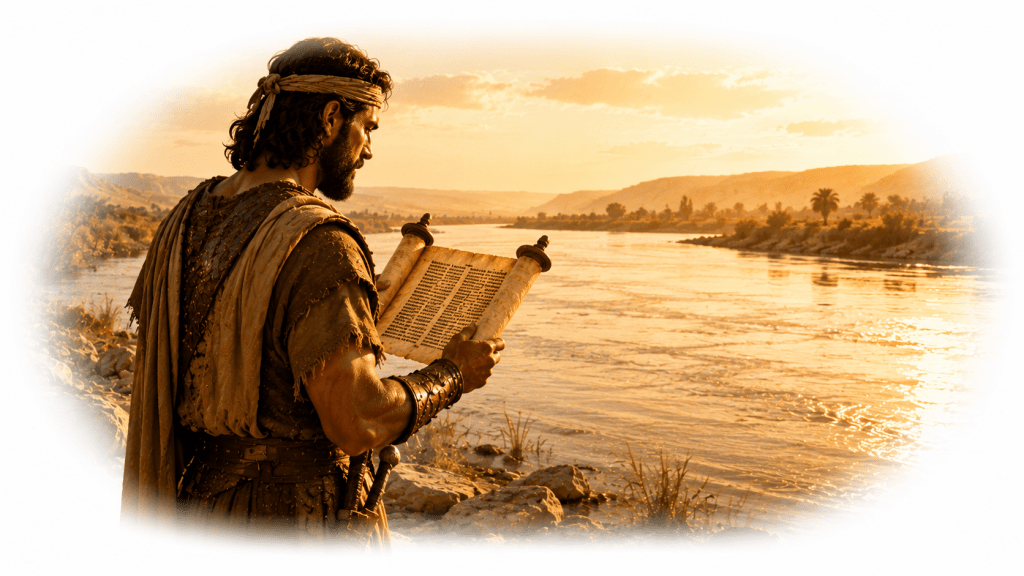
Before Joshua crossed the Jordan, before the first battle, before the first stone of Jericho fell, before any of the enormous challenges of the Canaan campaign had been faced, God gave him one preparatory instruction: “This book of the law shall not depart out of thy mouth; but thou shalt meditate therein day and night, that thou mayest observe to do according to all that is written therein: for then thou shalt make thy way prosperous, and then thou shalt have good success” (Joshua 1:8). The instruction has three components that together define what living under the Word means in practice.
The Word shall not depart out of thy mouth. Constant engagement, not occasional consultation of a reference text when a specific question arises, but the kind of immersive familiarity that means the Word is always present as a frame of reference, always available as the interpretive lens through which every new situation is evaluated. The person who lives under the Word is the person for whom the Word is always somewhere nearby, on the tongue, in the mind, available for recall.
Meditate therein day and night. The Hebrew word hagah, translated meditate, is the word for the low murmuring sound a person makes when turning something over carefully in their mind. Not a single morning devotional reading. Day and night engagement, the Word being turned over, considered, applied, and re-examined throughout the full range of the believer’s waking and resting life. This is not the Eastern meditation of the emptied mind. It is the biblical meditation of the filled and working mind, the mind that cannot stop returning to the Word because it has found something in the Word that keeps yielding more than the last reading produced.
That thou mayest observe to do according to all that is written therein. The purpose of the familiarity and the meditation is obedience. Not spiritual feeling. Not theological sophistication. Not the accumulation of doctrinal knowledge that remains purely intellectual. The Word is to be read, meditated upon, and then done. James 1:22 makes the same point with equal sharpness: “Be ye doers of the word, and not hearers only, deceiving your own selves.” The deception that hearing alone produces is the deception that knowing the Word is equivalent to living under it.
What Living Under the Word Looks Like
It looks like systematic reading. The person who lives under Scripture alone reads the Scripture, all of it, not only the familiar portions, not only the comfortable passages, not only the books whose themes they already understand. The Bible is a complete and sufficient Word, which means the parts of it you have never read may contain exactly what you need that you do not know you need. The Psalms of lament address the specific darkness you have not entered yet. The prophets speak to the specific cultural moment you do not yet understand. The genealogies contain the specific theology of continuity and covenant you do not yet have language for.
Systematic reading, working through the whole Bible across a regular cycle, is the basic practice of the person who genuinely intends to live under the full counsel of God rather than the selected counsel they have already encountered.
It looks like the Berean posture. Acts 17:11, searching the Scriptures daily whether those things were so. The person who lives under the Word brings every teaching they receive, from the pulpit, from a book, from a podcast, from a theological tradition, back to the text. Not with suspicion. With the Berean combination of readiness to receive and commitment to test.
This is the practice that breaks the cycle of the tradition-as-glasses problem identified in Day 2 of this series. The Berean does not receive what the tradition tells them the Bible says. They read the Bible and evaluate what the tradition says against it. This is not arrogance toward teachers or dismissal of scholarship. It is the practice of treating the Scripture as the authority that the doctrine of Sola Scriptura claims it to be.
It looks like bringing disputes to the text. When a theological question arises, about a specific doctrine, a specific ethical question, a specific interpretation, the person who lives under the Word does not first ask: what does my tradition say? What does my pastor say? What does the confession say? They ask first: what does the text say? The tradition, the pastor, and the confession may all be valuable guides, but they are guides to the text, not replacements for it.
It looks like letting the Word correct you. The most demanding and most practically important aspect of living under the Word is this: the willingness to let the text say something you did not want to hear, and to change as a result.
The person who reads the Bible to confirm what they already believe will find their confirmation, because the Bible is large and diverse enough to provide proof-texts for almost any position if you approach it as a quarry to mine rather than a word to receive. The person who reads the Bible to hear what it actually says will periodically find that it says something they were not expecting, something that requires them to abandon a position they had held confidently, something that calls them to obedience in an area they had been comfortable neglecting.
That willingness, to be corrected rather than merely confirmed, is the practical test of whether Sola Scriptura is a lived reality or a doctrinal label.
What Living Under the Word Does Not Look Like
It does not look like rejecting teachers and scholarship. The Word itself commends the gift of the teacher (Ephesians 4:11) and the value of careful exposition. The commentaries and systematic theologies and careful biblical scholars who have given their lives to helping readers understand the text more accurately are a gift to every believer who wants to understand the Word they are living under. The person who refuses all human assistance with the text is not practicing a purer form of Sola Scriptura, they are practicing a form of pride that mistakes isolation for independence.
It does not look like individual interpretive anarchy. The community of believers reading together, testing interpretations together, bringing the whole of the text to bear on specific questions together, this is the form that living under the Word is designed to take in the community of the church. The individual reads. The community tests. The text has the final word for both.
It does not look like reading the same passages repeatedly and calling it sufficient engagement. The person who has read John 3:16, Romans 8, and Psalm 23 a hundred times but has not read Leviticus, or Ezekiel, or Nahum, or 2 Chronicles, has not yet submitted themselves to the full counsel of God. They have submitted themselves to the portion of the full counsel they find most accessible and most comforting. That is better than nothing. It is not what Joshua 1:8 describes.
The Daily Discipline
Living under Scripture alone is a daily practice, not a theological position adopted once and maintained by declaration.
It is the morning reading before the day’s demands arrive. The return to the text in the middle of the decision that needs making. The specific verse recalled in the moment of the temptation. The passage that surfaces in the conversation about a struggling marriage, a prodigal child, a disease diagnosis, a business failure, not because you performed the theological calculation of “what does the Bible say about this” but because the day-and-night familiarity with the Word has made the relevant passage available without deliberate search.
This is what Joshua 1:8 is describing. Not the occasional consultation of the doctrinal reference book. The living familiarity with the sufficient Word, so thoroughly meditated upon, so consistently engaged, so deeply present in the mind and heart and speech, that it is genuinely the lamp for the specific next step, the light for the specific immediate path.
“Thy word is a lamp unto my feet, and a light unto my path” (Psalm 119:105). Feet and path, not the distant horizon, not the comprehensive plan for the years ahead. The specific next step in the specific present moment. The person who has meditated in the Word day and night has the lamp for that step. The person who has consulted the Word occasionally does not.
Tomorrow, Day 26, the church under the Word. What genuine community looks like when it is formed around the sufficient text.
“This book of the law shall not depart out of thy mouth; but thou shalt meditate therein day and night, that thou mayest observe to do according to all that is written therein.” — Joshua 1:8 KJV
📖 This post is adapted from Why I Believe the Bible: A Personal Defense of Sola Scriptura. If it helped you, the full book is available on Amazon — or you can support this ministry directly.
thefinalconvergence.com | Follow on Instagram, Facebook, X, and YouTube
If you like to be updated on new blogs, sign up to our newsletter!


Leave a comment