
Published: August 9, 2026 | thefinalconvergence.com
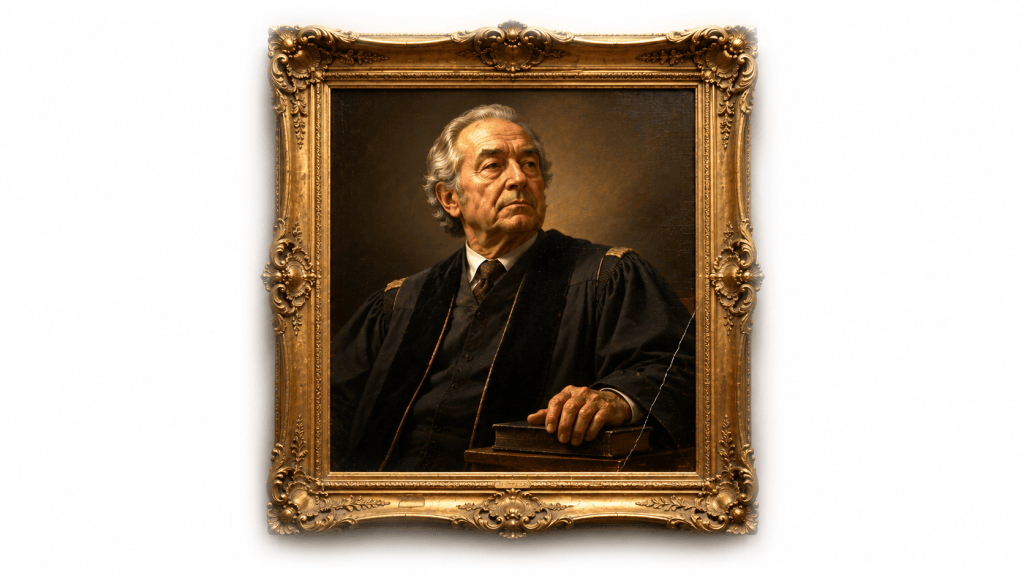
Days 22 through 24 engage the named critics directly. Not dismissal. Not caricature. Their actual arguments, stated as fairly as possible, engaged with the precision and the respect their genuine scholarship deserves.
The first named critic is R.C. Sproul.
Acknowledging Sproul’s contribution before critiquing his argument is not a rhetorical courtesy, it is an intellectual obligation. Sproul was among the most gifted theological communicators of the twentieth century. His ministry through Ligonier Ministries brought the Reformation’s insights to millions of believers who would not otherwise have encountered them. His commitment to the Reformed tradition’s theological conclusions on justification, the sovereignty of God, and the nature of grace was genuine, sustained, and pastorally fruitful. His book Scripture Alone is a serious and largely faithful account of the Reformation’s Sola Scriptura principle.
The critique that follows is not a critique of Sproul’s intentions or his general theological direction. It is a critique of specific argumentative moves that, despite Sproul’s genuine commitment to Sola Scriptura, opened doors the Biblicist argument must close.
“We have also a more sure word of prophecy; whereunto ye do well that ye take heed, as unto a light that shineth in a dark place, until the day dawn, and the day star arise in your hearts” (2 Peter 1:19). The more sure word. Peter has just described the direct experience of the transfiguration, the audible voice from heaven, the visible glory of the transfigured Christ. And then Peter says: we have something more sure than this. The word of prophecy. The Scripture. More sure than the direct experiential witness of the apostle who was there. The Scripture’s authority exceeds even direct apostolic experience.
Sproul believed this. The critique is that specific arguments in his case for Sola Scriptura, when pressed to their conclusions, undermine this very claim.
Sproul’s Argument One: The Solo Scriptura Distinction
Sproul, among others, drew a distinction between Sola Scriptura and what he called solo scriptura, the individualistic, tradition-dismissing approach that treats every reader’s interpretation as equally authoritative. Sproul argued that the genuine Reformation principle was never the elimination of tradition from the interpretive process but its subordination to Scripture. Solo scriptura, he argued, was the degenerate form of the Reformation principle.
The fair engagement: This distinction is real and the concern behind it is legitimate. Genuine individualistic Bible reading in isolation from the community and the tradition does produce the kinds of errors Sproul was worried about. Day 16 of this series acknowledged this directly.
The problem: Sproul deployed the solo scriptura slur against readings that departed from the confessional tradition, not only against genuine individualistic isolationism. The distinction became, in his application and especially in the application of his followers, a way to protect confessional conclusions from Berean scrutiny. The label solo scriptura was available to be attached to any reading that differed from the tradition, regardless of whether that reading was actually produced by the individual-in-isolation that the term technically described.
This is the straw man engagement of Day 16 applied to Sproul specifically: his category of solo scriptura is legitimate when applied to genuine individualistic isolationism. It becomes illegitimate when extended to the Berean community that tests every claim against the Scripture, including the confessional claims.
Sproul’s Argument Two: The Canon Argument
This is Sproul’s most theologically sophisticated and most honestly stated contribution to the Sola Scriptura debate. He acknowledged it as a problem and was willing to sit with it: The Scripture’s authority is its own, intrinsic, derived from its divine origin. But the canon, the specific collection of sixty-six books that constitutes the Scripture, was determined by a process that involved fallible human beings making judgments about which books belonged and which did not. Sproul’s famous formulation: “We have a fallible collection of infallible books.”
The church’s determination of the canon, Sproul argued, was a fallible act. The councils of Hippo and Carthage were not infallible. Their determination of the canon was not an infallible decree. We trust their determination as reliable, but it is not infallible.
This is an honest acknowledgment of an epistemological tension. Sproul handled it more honestly than many who have followed him, refusing to use it as Rome does, as a lever to elevate the church to Magisterial authority over the Scripture.
The Biblicist response:
Sproul’s formulation, “a fallible collection of infallible books”, concedes more to the Roman Catholic epistemological argument than the Biblicist position requires.
The alternative is the self-attestation argument. The sixty-six books of the canon are not authoritative because a church council recognized them. They are authoritative because the Spirit who breathed them out also attests their authority to the regenerate reader, bearing witness by and with the Word in our hearts (WCF 1.5). The church’s recognition of the canon is not the ground of the canon’s authority. It is the Spirit-guided community’s response to the intrinsic authority the books themselves carry.
This means the church recognized the canon, it did not create it. The distinction matters enormously. If the church recognized the canon, the canon’s authority predates and is independent of the church’s recognition. The church’s recognition is reliable not because the church is infallible but because the Spirit who attests the canon’s authority also guided the recognizing community to receive what the Spirit had already authenticated.
Sproul’s formulation of a “fallible collection” leaves the canon’s authority more dependent on human judgment than the self-attestation argument requires. And this specific concession, however honestly made, is the opening through which the Roman Catholic epistemological challenge continues to press: if the church’s judgment about the canon is only fallibly reliable, why trust the church’s judgment here and not elsewhere?
The Biblicist answer closes that opening: the canon’s authority is not fallibly certified by the church. It is intrinsically carried by the books themselves, attested by the Spirit, and recognized, not created, by the community the Spirit guided.
Sproul’s Argument Three: The Church’s Ministerial Authority
Sproul consistently maintained that the church has ministerial authority over the Scripture, not Magisterial authority. Ministerial: the church serves the Scripture. Magisterial: the church governs the Scripture. He was careful about this distinction. He explicitly resisted the Roman Catholic elevation of the church to Magisterial authority. And in his own formulations, he maintained the ministerial/Magisterial distinction with precision.
The problem is not Sproul’s own formulation. The problem is what his followers have done with the tradition he produced. Sproul built communities, through Ligonier, through Reformed Theological Seminary, through the network of confessional churches and scholars formed in his tradition, that received his commitment to the Reformation’s theological conclusions and implemented them through confessional subscription structures. The confessional subscription structures of those communities, as described in Day 13, have produced the Stage Three and Stage Four dynamics that Sproul’s ministerial/Magisterial distinction was designed to prevent.
The Sproul legacy, in other words, is internally inconsistent. The theology formally maintains the ministerial distinction. The institutional structures functionally reproduce the Magisterial authority. The gap between Sproul’s stated principle and his tradition’s institutional practice is the specific location of the Protestant Magisterium problem.
This is not a condemnation of Sproul. It is the observation that the best intentions, without the consistent application of the Biblicist principle, produce the same structural problem regardless of the intention. The principle must be applied consistently; to the confession, to the tradition, to the institutions Sproul built, or the Magisterial authority returns through the structures even as the theology formally rejects it.
What Sproul Got Right — and Why It Matters
The critique above must not obscure what Sproul got right, because what he got right is important for the Biblicism argument. Sproul’s Scripture Alone correctly identified that the Scripture’s authority is inherent, not derived from the church. His treatment of the internal testimony of the Holy Spirit, the Spirit bearing witness to the Scripture’s authority in the believer’s heart, is faithful and important. His consistent insistence that Sola Scriptura requires the supremacy of the Scripture over tradition and church authority is correct.
The Biblicist is not arguing against Sproul’s theological conclusions about the Scripture’s authority. The Biblicist is arguing that those conclusions must be applied more consistently than Sproul’s institutional legacy has applied them, including to the confessional tradition that Sproul honored and helped to build. The best of Sproul is on the side of Biblicism. The institutional legacy of Sproul is where the problem lies.
Tomorrow, Day 23, Michael Horton.
“We have also a more sure word of prophecy; whereunto ye do well that ye take heed, as unto a light that shineth in a dark place.” — 2 Peter 1:19 KJV
📖 This post is adapted from Biblicism: The Faith Once Delivered. If it helped you, the full book is available on Amazon — or you can support this ministry directly.
thefinalconvergence.com | Follow on Instagram, Facebook, X, and YouTube
If you like to be updated on new blogs, sign up to our newsletter!


Leave a comment