
Published: August 23, 2026 | thefinalconvergence.com
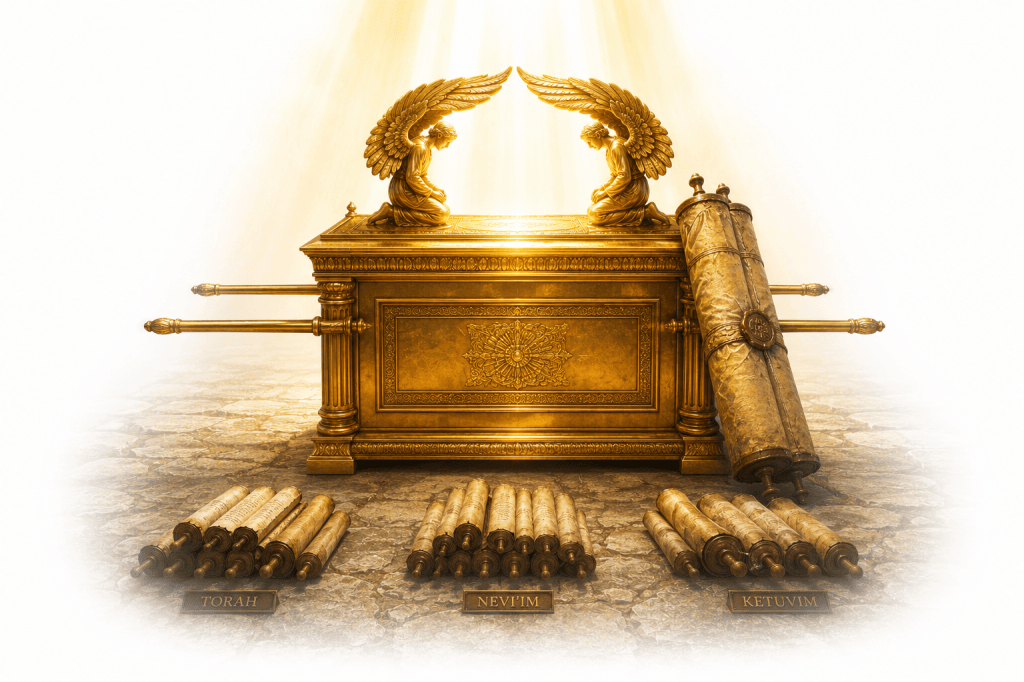
The foundation is laid. Now the series turns to the specifics, and it begins where the Bible begins, with the Old Testament. Because one fact about the Hebrew canon quietly demolishes the most popular conspiracy theory of our age.
The Old Testament was already a closed, recognized collection of divine Scripture before a single New Testament letter was written.
By the time Jesus was born in Bethlehem, the Hebrew Bible had been the established Word of God for centuries. The Jewish people of the first century did not debate which books belonged in their Scriptures. That question had been settled long before. Which means the whole notion that the Bible was assembled by powerful church councils operating centuries after Christ collapses on the Old Testament alone, its canonical status was established independently of the Christian church, tested over centuries of Jewish life and worship, and inherited by the New Testament writers as the unquestioned Word of God.
“Take this book of the law, and put it in the side of the ark of the covenant of the LORD your God, that it may be there for a witness against thee” (Deuteronomy 31:26).
Placed beside the ark. Inside the most sacred space in Israel’s worship. From the moment the Law was given, its preservation was treated as a divine priority, because this was not a book about God. It was the covenant document of God.
The Three Sections of the Tanakh
The Hebrew Bible is organized into three major sections, and the Hebrew name for it, Tanakh, is built from the first letters of the three:
Torah — the Law: the five books of Moses. Nevi’im — the Prophets: former and latter. Ketuvim — the Writings: poetry, wisdom, and narrative.
These three sections did not acquire their canonical status all at once. The Torah was recognized first, then the Prophets, and finally the Writings. This sequence is not evidence of a haphazard, uncertain process, it reflects the progressive unfolding of God’s revelation across centuries of covenant history. Each layer of Scripture was recognized as it was given, tested against what came before, and received by the people of God.
The Torah: Foundation of the Covenant
The five books of Moses; Genesis, Exodus, Leviticus, Numbers, and Deuteronomy, form the irreplaceable foundation of the entire canon. They establish who God is, who humanity is in relation to Him, and what the covenant requires. Without the Torah, neither the prophets nor the apostles can be understood.
The Torah’s authority was established by the events of Sinai themselves. God spoke to Moses face to face, as a man speaketh unto his friend (Exodus 33:11), a relationship of unmediated intimacy that made Moses’ prophetic office categorically unique. The Torah was not an account of what Moses thought about God. It was the record of what God said to Moses, did through Moses, and commanded His people through Moses.
And from the first moment, its preservation was treated as sacred. Moses commanded that the completed Torah be placed beside the Ark of the Covenant, in the most sacred space in Israel. It was to be read publicly to all Israel every seven years. The king was commanded to write his own copy and read it every day of his life. Parents were to teach it to their children from morning to night. These were not the customs of a people who saw the Torah as one spiritual option among many. They were the practices of a people who understood it as the very terms of the covenant between the LORD and Israel, a matter of life and death.
Its authority was never seriously disputed in ancient Israel. When prophets arose who contradicted Moses, they were not debated, they were condemned. The Torah was the measuring rod by which every subsequent revelation was tested. This sets the pattern for the whole canon: later revelation builds on and expands what came before, but never contradicts or replaces it.
One implication is worth naming, because our own age presses hard against it. The Torah does not open with poetry or myth. Genesis 1 is historical prose, the same sequential narrative grammar as the rest of the Pentateuch, with numbered days bounded by evening and morning. Moses did not shift into a symbolic register for the creation account. A canon that treats the Flood as history, the Exodus as history, and the genealogies as chronological records must treat Genesis 1 with the same consistency. To accept the Torah’s historical authority while dismissing its opening account as non-literal is not Sola Scriptura, it is the accommodation of Scripture to an external consensus, the very error the Reformers opposed.
The Nevi’im: The Voice of the Covenant God
The second section, the Prophets, divides into two parts: the Former Prophets and the Latter Prophets.
This can confuse modern readers, because the Former Prophets; Joshua, Judges, Samuel, and Kings, look like history books. But in the Hebrew tradition they were classified as prophetic because they were written under prophetic inspiration and interpreted Israel’s history through the lens of covenant faithfulness and unfaithfulness. They are not bare chronicles. They are theological history, a sustained interpretation of why Israel rose and fell according to her covenant relationship with God. The pattern is sobering and clear: faithfulness brought blessing, apostasy brought prophetic warning, and ignored warning brought judgment.
The Latter Prophets; Isaiah, Jeremiah, Ezekiel, and the Twelve, carry the direct oracles of God’s covenant messengers. Their recognition followed the same criteria that governed the Torah: Did they come from men demonstrably sent by God? Did their predictions come true? Did their message align with the Torah? Did the people of God receive them? For the great writing prophets, the answer to all four was yes, often only after their ministries had ended and their prophecies had been vindicated by history. Isaiah predicted the Babylonian exile before Assyria had even been dealt with. Jeremiah was thrown into a cistern for his message. Ezekiel prophesied as a prisoner in Babylon. Each was vindicated, and each entered the canon.
And the prophetic books carry one of the most powerful evidences of divine origin in all of Scripture: messianic prophecy. Hundreds of specific predictions about the coming Messiah; His lineage, His birthplace in Micah 5:2, His entry into Jerusalem in Zechariah 9:9, His betrayal for thirty pieces of silver in Zechariah 11:12-13, the manner of His death in Psalm 22 and Isaiah 53, His resurrection in Psalm 16:10 — written centuries before their fulfillment, preserved by a community that took extreme care not to alter them, and fulfilled with precision in Jesus of Nazareth. No naturalistic explanation accounts for this. The prophets spoke under divine inspiration, and the God who inspired them fulfilled their words in His Son.
The Ketuvim: The Inspired Writings
The third section, the Writings, is the most diverse; the Psalms, Proverbs, and Job; the five festival scrolls (Song of Solomon, Ruth, Lamentations, Ecclesiastes, Esther); and Daniel, Ezra-Nehemiah, and Chronicles.
The Writings did not circulate with a single prophetic voice declaring thus saith the LORD. Their authority came instead from their evident inspiration, their consistency with the Torah and the Prophets, their reception by the people of God, and, in many cases, explicit claims to divine origin within the texts. The Psalms are Israel’s Spirit-inspired hymnal. Job addresses the deepest questions of divine justice with an insight no purely human mind produces. Proverbs builds a whole framework of covenant wisdom on the fear of the LORD.
Some books required more time before universal recognition, and the debates are instructive, not troubling. Ecclesiastes and the Song of Solomon were occasionally discussed among the rabbis, not because their inspiration was doubted in principle, but because their content required careful interpretation. Esther, which never names God, also took longer to be universally received, yet the providence of God runs through every page, and its message that God protects His covenant people even in exile, even when invisible, is a vital strand in the whole tapestry.
That the ancient community debated these books at all testifies to the seriousness with which it treated canonicity. This was not a careless process of anthology-making. It was a reverent, centuries-long recognition of what God had given.
A Canon Settled Before the Church Existed
Here is the point that anchors the whole chapter. By the time the New Testament church came into being, the Hebrew canon; Torah, Nevi’im, Ketuvim, was already fixed, closed, and recognized. The apostles did not assemble it. They inherited it. The church did not create it. It received it, whole and settled, from the hands of the covenant people who had guarded it for centuries.
The measuring rod was already in place. Which means the entire New Testament was written by men who already held a complete, recognized Old Testament in their hands, and who quoted it, argued from it, and built on it as the unquestioned Word of God.
Tomorrow, the most decisive testimony of all to that Old Testament canon: the personal witness of Jesus Christ.
“Take this book of the law, and put it in the side of the ark of the covenant of the LORD your God, that it may be there for a witness.” — Deuteronomy 31:26 KJV
📖 This post is adapted from Canon and Covenant: How God Preserved His Word Through History. If it helped you, the full book is available on Amazon — or you can support this ministry directly.
thefinalconvergence.com | Follow on Instagram, Facebook, X, and YouTube
If you like to be updated on new blogs, sign up to our newsletter!


Leave a Reply