
Published: September 7, 2026 | thefinalconvergence.com
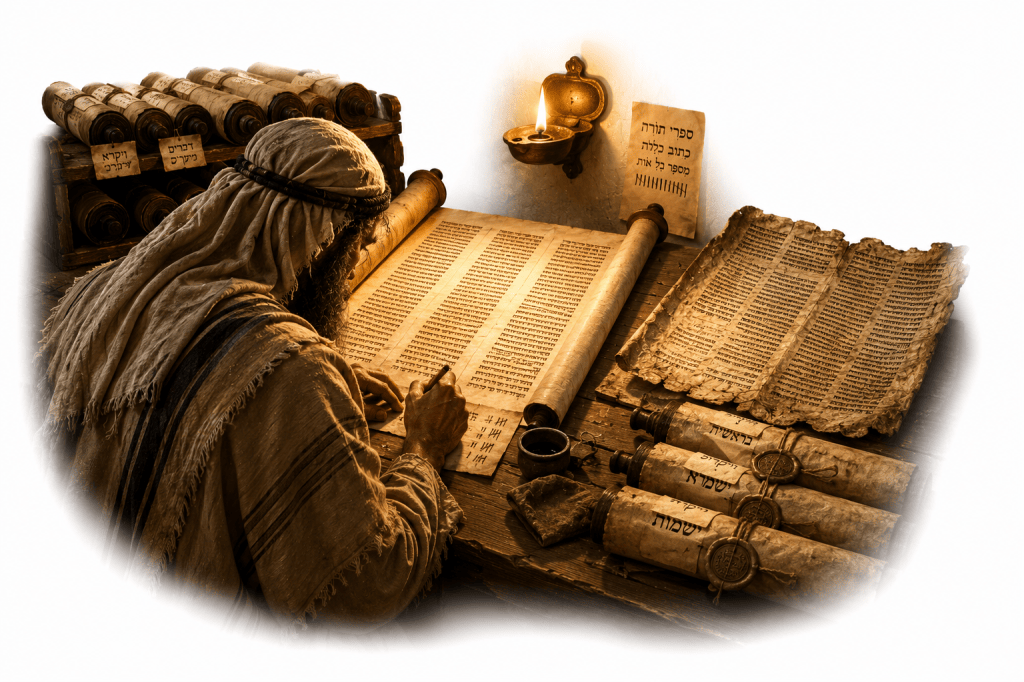
Twenty days of this series have settled one enormous question. Which books belong in the Bible? Sixty-six. Recognized, not created. Confirmed by Christ. Closed by God when the apostolic foundation was complete. Sufficient for every good work. Defended against every counterfeit that has ever gathered around it.
That question is answered. But answering it well raises another, quieter, but unavoidable, and today the series pauses at the threshold of it, because it is the doorway to everything that comes next.
We know which books. But within those books, which words?
“Thy word is very pure: therefore thy servant loveth it” (Psalm 119:140).
Very pure. The psalmist does not merely love the Word because it is his; he loves it because it is pure, unmixed, unadulterated, true down to its words. And that raises the question of the text with real force. If the purity of God’s Word is part of what makes it lovely and trustworthy, then it matters not only which books we hold but whether the words within them have been kept pure across three thousand years of copying. The canon question asks which books. The purity of the Word presses a second question: which words.
Two Questions, Not One
It is essential to see that these are two distinct questions, because they are constantly confused, and the confusion produces far more heat than light.
The canon question asks: which books belong in the Bible? That is the question this entire series has answered. Its answer is settled, and there is no meaningful dispute about it among Protestant believers. Whether you open a King James Bible, a New American Standard, or an English Standard Version, you are holding the same sixty-six books. Genesis through Revelation, no more and no less. The canon is not a translation issue.
The text question asks something narrower and more precise: within those sixty-six recognized books, what exactly did the original authors write? The books of the Bible were penned across roughly fifteen centuries, and the originals, the very papyrus and parchment that Moses and Paul and John wrote on, have long since perished, as all ancient documents do. What we possess instead are copies. Thousands upon thousands of them: more than 5,800 Greek manuscripts of the New Testament alone, plus thousands more in Hebrew, Latin, Coptic, and Syriac. And here the question sharpens: where those copies differ from one another, as hand-copied documents inevitably do in small ways, which reading preserves what the author actually wrote?
That is a real question. It is a different question from the canon question. And it deserves to be held apart from it with great care.
Why the Distinction Protects You
Keeping these two questions separate is not a technicality. It is a safeguard against two opposite errors.
The first error collapses the text question into the canon question, treating every manuscript variation as though it threatened which books belong in the Bible, or whether we can trust the Bible at all. Skeptics love this move. They point to differences among the manuscripts and announce that the Bible is hopelessly uncertain, that we cannot know what it originally said, that the whole thing is unstable. But that is a sleight of hand. The canon is settled; the overwhelming majority of the text is not in question at all; and the manuscript evidence for the New Testament is vastly richer than for any other document of the ancient world. To let a genuine, narrow question about specific readings masquerade as a crisis about the whole Bible is exactly the deception this series has been unmasking since Day 1.
The second error runs the opposite way, it treats the text question as though it did not exist, or as though asking it were somehow faithless. But asking which words did the author write is not doubt. It is love for the pure Word. Thy word is very pure — therefore thy servant loveth it. A believer who loves the purity of Scripture will care whether the words in front of him are the words God gave. The question is not an attack on the Bible. It is a mark of taking the Bible with the seriousness it deserves.
Hold the two apart, and both are answered rightly: the canon is closed and certain, and the text, kept by the same Providence that recognized the canon, is worth examining carefully, precisely because every word of God is pure.
The Providence That Reaches to the Words
And here is the encouragement that the whole series has been building toward. The same God who superintended the recognition of the canon also superintended the preservation of its text.
Think back over what we have already seen. The Masoretes counted every letter of the Hebrew Scriptures, recording which letter fell at the exact middle of each book, building elaborate systems of checks to guard against a single scribal slip, and when the Dead Sea Scrolls surfaced in 1947, they confirmed that the Hebrew text had been preserved with astonishing fidelity across a thousand years. The New Testament survives in more manuscripts, from more places, closer to the original, than any other work of antiquity. The degree of agreement among them is remarkable. And no core doctrine of the Christian faith hangs on a disputed reading.
This is not the picture of a text hopelessly corrupted and lost. It is the picture of a text kept, guarded across the centuries by the providence of a God who promised that His words would not pass away. The very abundance of manuscripts that raises the text question is itself the answer to the skeptic’s despair: we do not have too few witnesses to know what Scripture said. We have more than enough.
But abundance also means work. Where the witnesses differ, the differences have to be weighed. Which manuscript traditions best preserve what the authors wrote? What is the relationship between the Received Text underlying the Reformation Bibles and the critical texts underlying most modern translations? How should a believer who loves the pure Word think about these things, following the evidence, without fear and without denominational combat?
The Doorway to What Comes Next
Those are exactly the right questions, and they are not the questions of this book. This book set out to answer the canon question, and it has: sixty-six books, settled and sufficient. The text question deserves its own careful, thorough, evidence-driven treatment. It deserves more room than the closing days of one series can give it.
So consider today a threshold. The canon question is behind us, answered and secure. The text question stands open before us, the natural, necessary next step for anyone who has followed the argument this far. Having established which books are the pure Word of God, the honest reader is bound to ask which words within them, and how we can know.
That question has a book coming. And the days ahead will point straight toward it. For now it is enough to name the threshold clearly and to stand on the ground already secured: the canon is closed, the Word is sufficient, and every word of God is pure, which is exactly why the words are worth examining with all the care that love for a pure text demands.
The series now turns toward its final movements, the canon under attack in our own day, the call to stand firm, and the question of the text that carries us into what comes next.
“Thy word is very pure: therefore thy servant loveth it.” — Psalm 119:140 KJV
📖 This post is adapted from Canon and Covenant: How God Preserved His Word Through History. If it helped you, the full book is available on Amazon — or you can support this ministry directly.
thefinalconvergence.com | Follow on Instagram, Facebook, X, and YouTube
If you like to be updated on new blogs, sign up to our newsletter!


Leave a Reply